Madrid neighbourhood guide
Huertas / Barrio de las Letras: Madrid's Literary Quarter, Street by Street
In the tangle of streets between Sol and the Prado, Golden Age verse is set into the pavement and century-old tabernas still pour vermouth from the barrel — a walking guide to Madrid's most literate barrio.
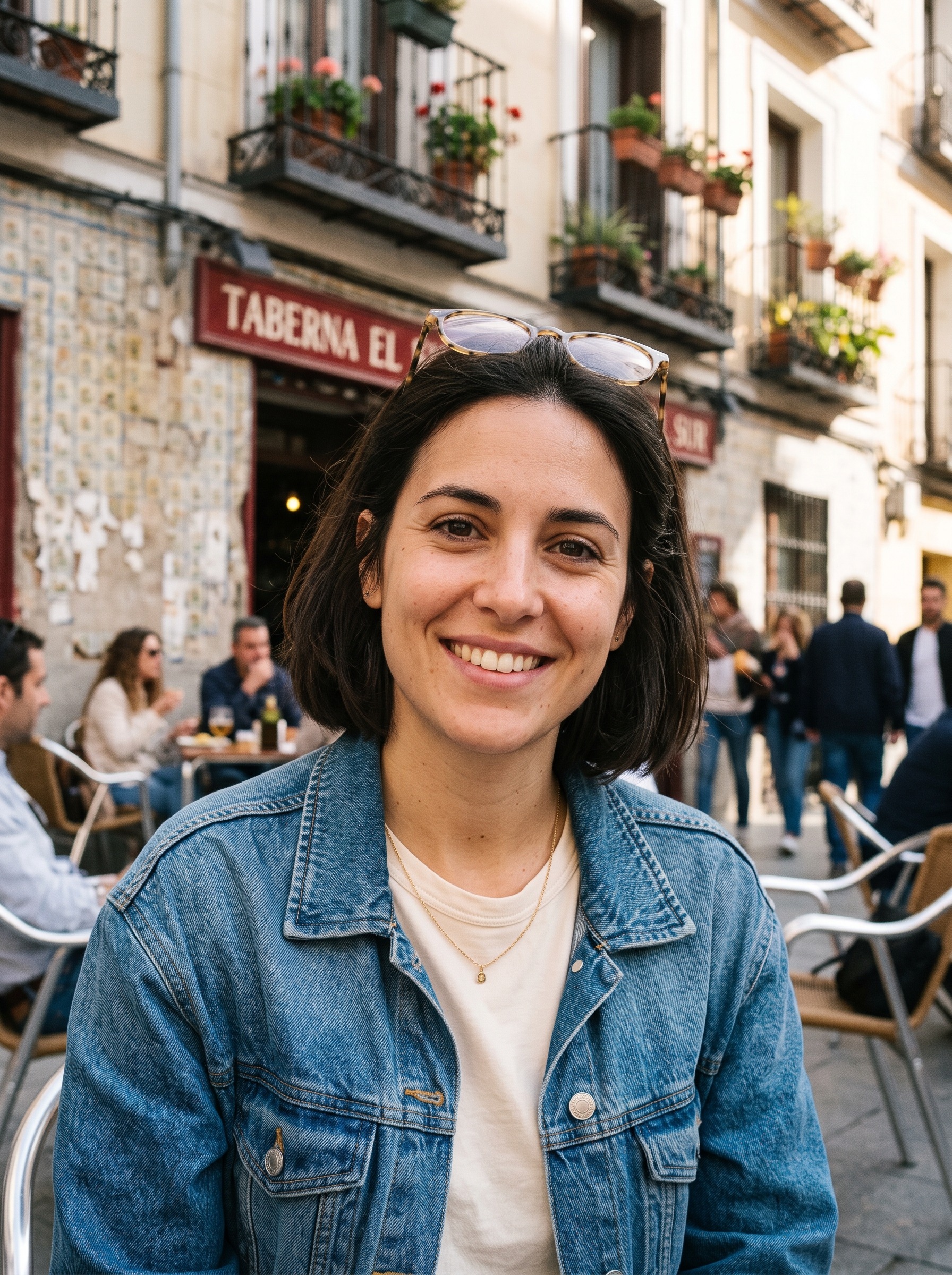
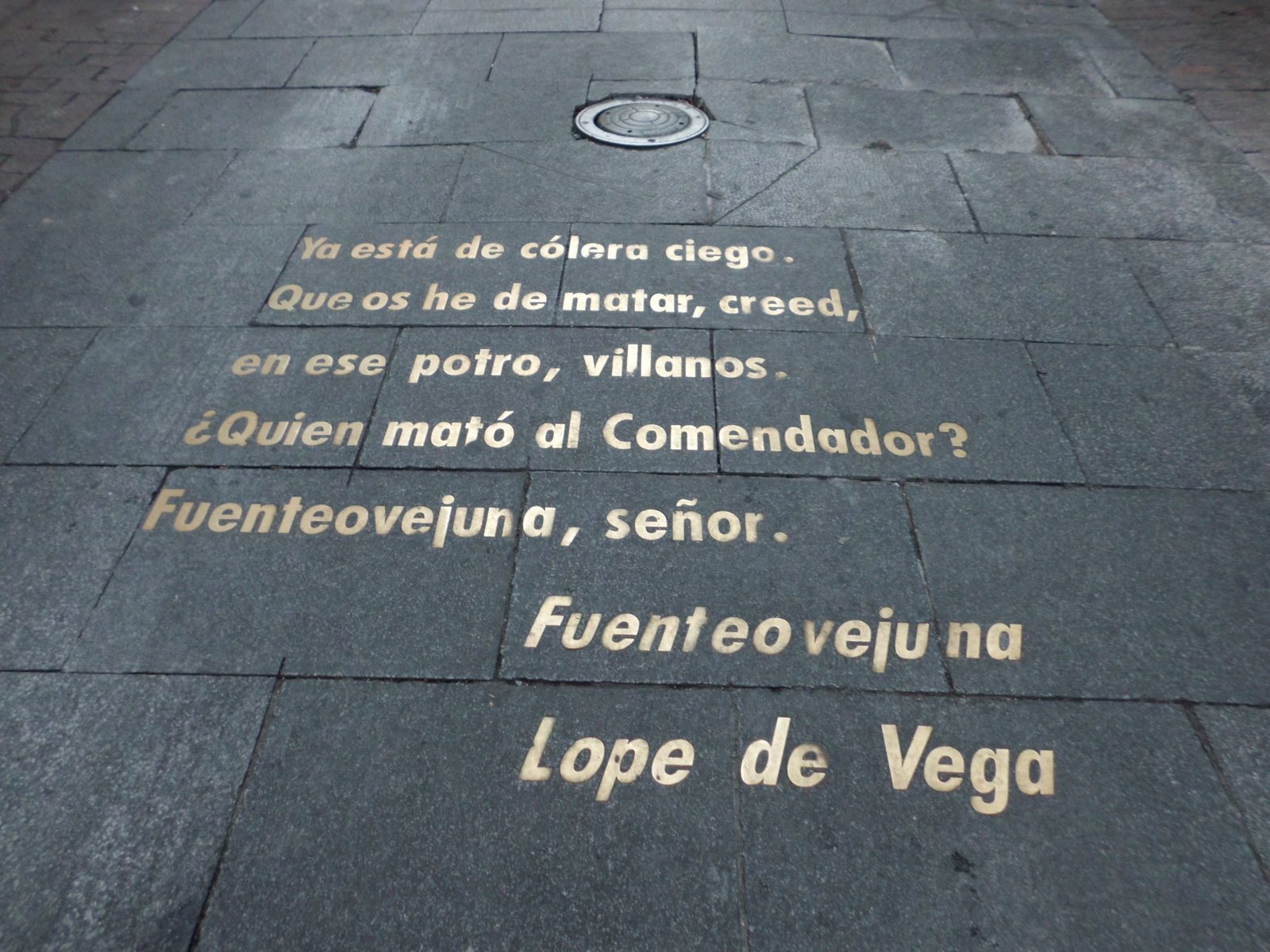
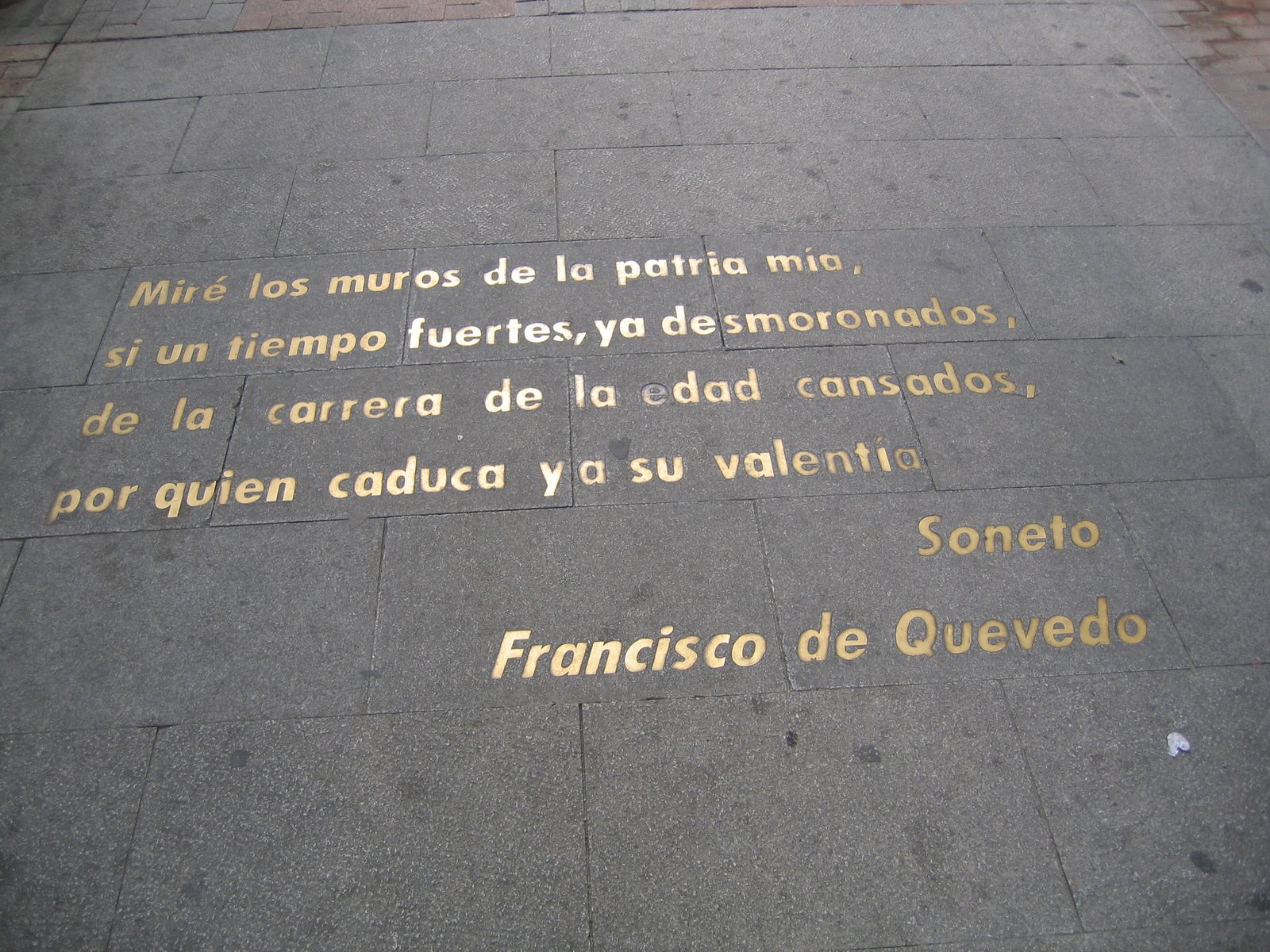
Bend down on Calle de las Huertas and you'll find lines of Golden Age verse cut into the paving stones — a fragment of Cervantes here, a line of Lope de Vega there, laid into the pedestrian stretch so that anyone in trainers or dragging a wheeled suitcase walks, quite literally, across the neighbourhood's own bibliography. Between Puerta del Sol and the Prado, this sloping grid of streets goes by two names, and both are earned. Huertas comes from the street that runs through its middle. Barrio de las Letras — the Literary Quarter — comes from the writers who lived here in the sixteenth and seventeenth centuries: Cervantes, Lope de Vega, Quevedo, Góngora, all within a few hundred metres of one another, and close enough to the corrales de comedias where their plays were staged that they could probably have heard the applause from their windows.
What Huertas / Barrio de las Letras is known for
This is Madrid's literary quarter first, and everything else about it — the bars, the noise, the tourists with the Prado on their itinerary — sits on top of that foundation. Cervantes, Lope de Vega, Quevedo and Góngora didn't just live here; they wrote here, argued here, and in Lope de Vega and Góngora's case, feuded here, close to the corrales de comedias where Golden Age theatre was first staged for a paying public. The quotations set into the paving of Calle de las Huertas are the clearest sign the neighbourhood hasn't tried to museum-ify that history so much as leave it lying around underfoot. It makes Huertas a strange, workable hybrid: a barrio that's central and walkable enough for a first-time visitor to use as a base for Sol, the old town and the Prado without ever going near a metro platform, but that also has a genuine, lived-in identity of its own — something food-and-drink travellers notice quickly, given how many century-old tabernas and seriously-ranked cocktail bars sit within a few blocks of each other. It suits couples and small groups who want a night out with some noise in it, without wanting a full club scene; that's Malasaña's job, or Gran Vía's. And it's honest about its limits, too — this is not the neighbourhood for a light sleeper on a strict budget, because Plaza de Santa Ana and the streets feeding into it run loud on weekend nights, nor is it the quiet, residential base that Chamberí or Lavapiés can offer.
Where to eat and drink
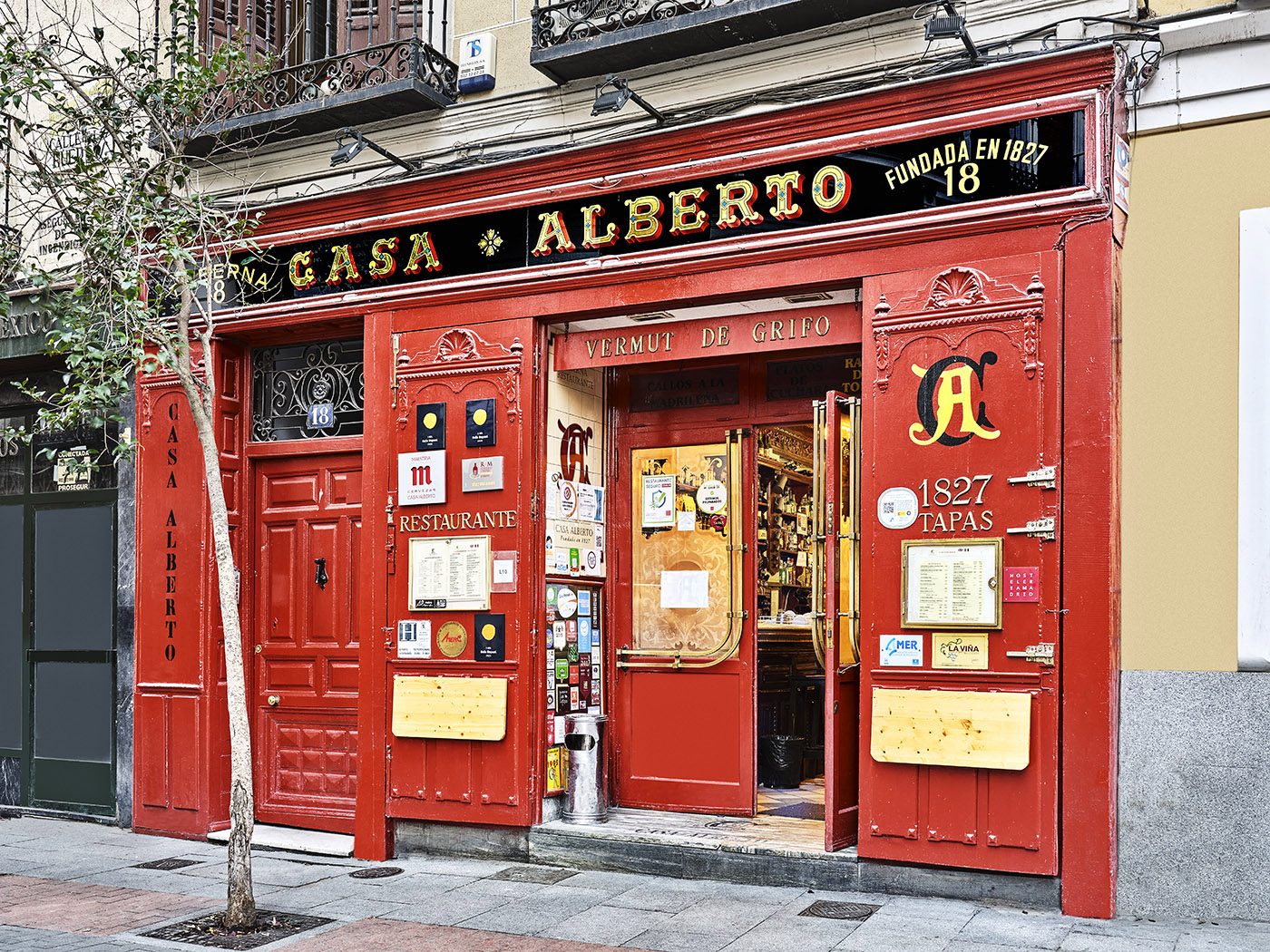
Huertas runs on tabernas that have barely changed in a century, and the oldest of them is Casa Alberto, on Calle de las Huertas since 1827 and generally reckoned to be Madrid's oldest taverna full stop. The zinc bar is original; so, more improbably, is the running water trough beneath it that once kept wine barrels cool before anyone thought of refrigeration. Order the vermouth on tap and you're drinking it more or less the way the bar's first customers did.
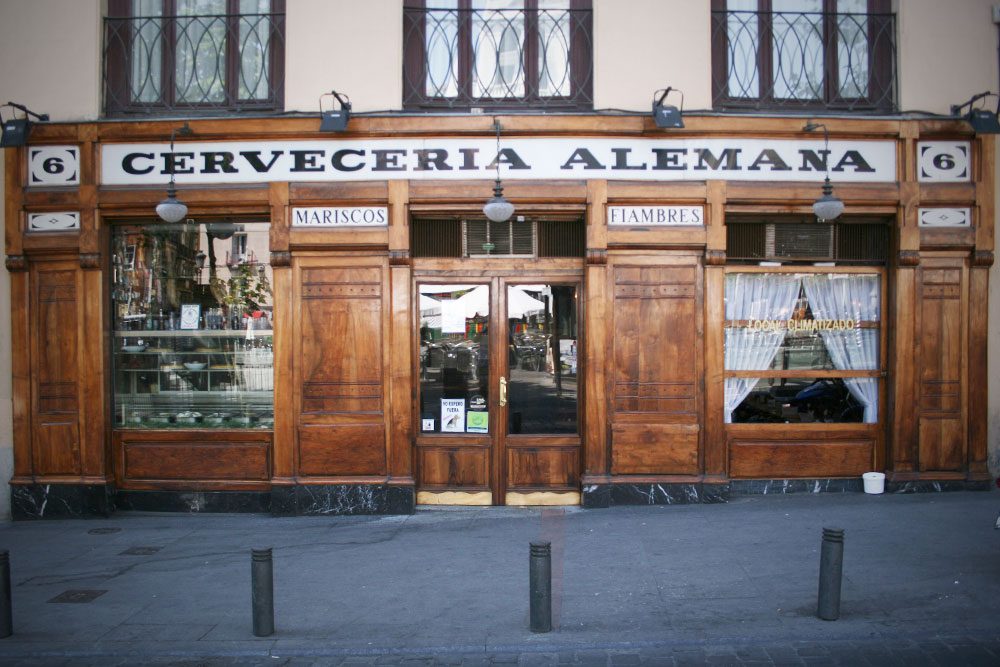
A few streets over, on Plaza de Santa Ana, Cervecería Alemana has been pouring beer since 1904, its decor close enough to untouched that the place is now a protected historic establishment. It picked up a Hemingway connection along the way — he drank here, inevitably — but the room doesn't lean on that; it's the marble tables and the unhurried waiters in white jackets that do the talking.
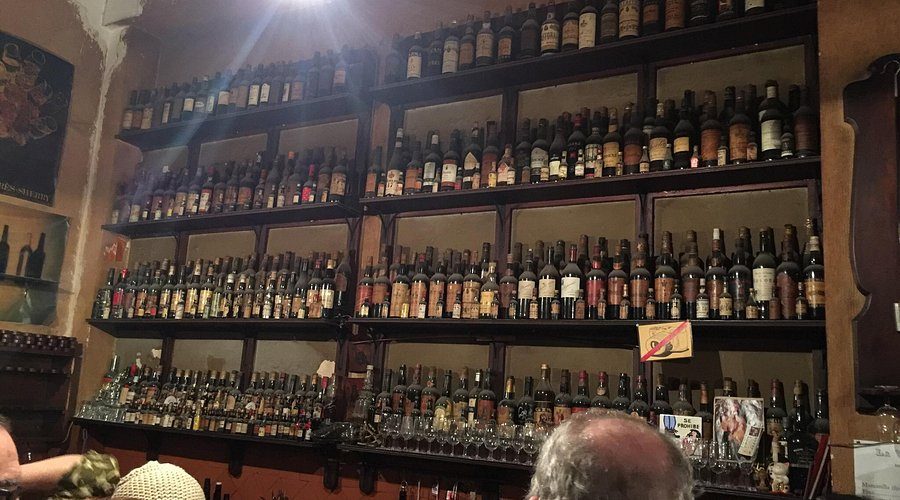
For something stranger and stricter, there's La Venencia, tucked onto Calle de Echegaray since the Civil War years and run, by all appearances, on rules laid down sometime in the 1930s and never revisited: five sherries, chalked prices on a blackboard that's older than most of its customers, no photographs, and — famously — no tips. It's the kind of bar that makes its own atmosphere by refusing to modernise a single fitting.
For a step up in ambition without leaving the barrio's essential character behind, Triciclo on Calle de Santa María is Michelin Guide-listed bistronomie — oxtail canelones, tuna-and-avocado tostas — the kind of cooking that treats Spanish comfort food as a starting point rather than a script to follow exactly. Casa González, on Calle de León, has been a wine, cheese and cured-meat shop since 1931 and still functions as one, except that half the room now stands at the counter eating what the shelves are selling — a tapas bar that never quite stopped being a delicatessen. And when none of that feels necessary, there's always Bar Quevedo on Calle de las Huertas, where a caña still comes with a tapa on the house, no ordering required, which is either an anachronism or the whole point of a neighbourhood taberna, depending on how cynical you're feeling.
Nightlife
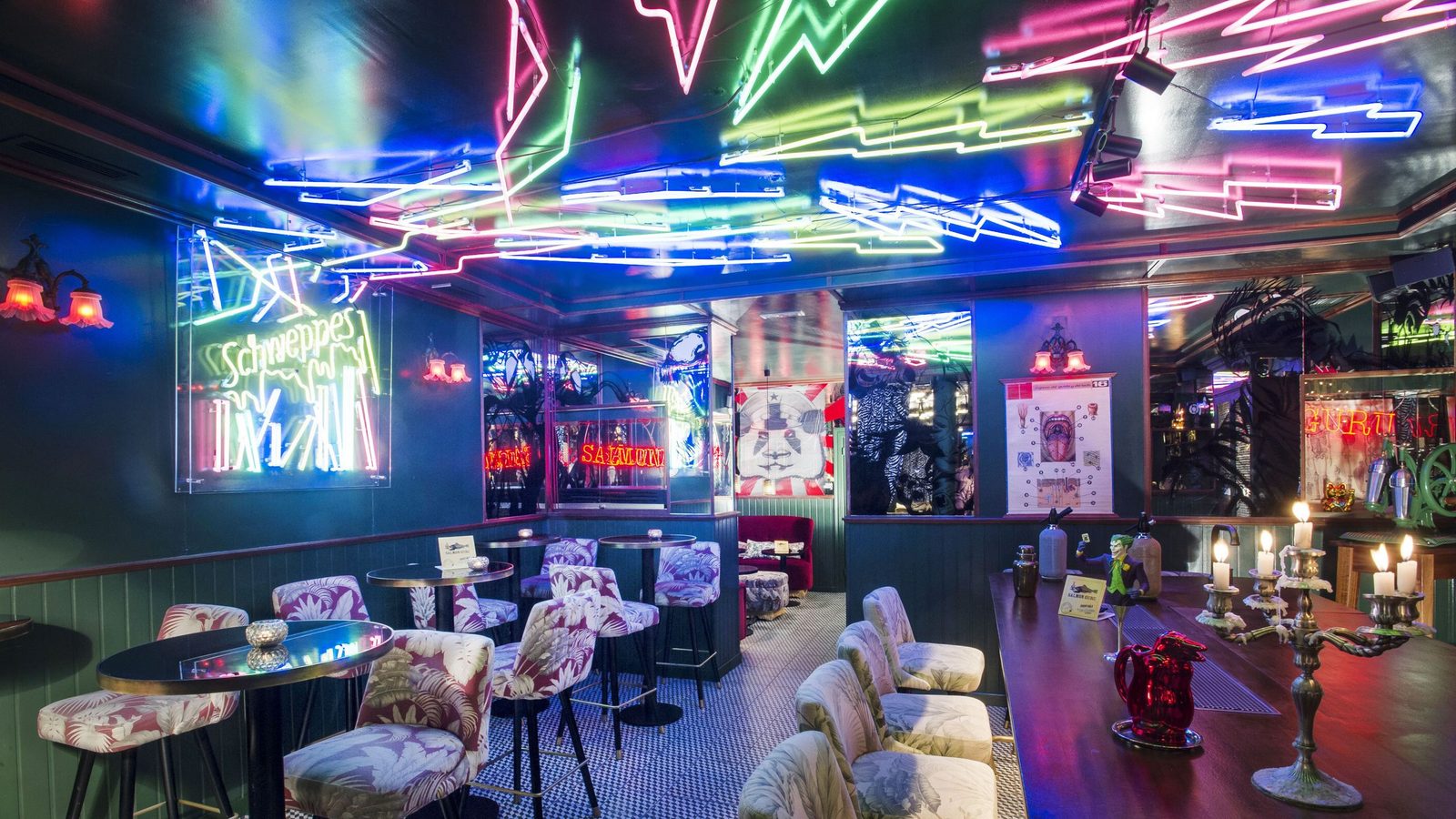
The neighbourhood's after-dark reputation, these days, is carried almost single-handedly by Salmón Guru, a neon-lit, comic-book-muralled cocktail bar on Calle de Echegaray that placed thirty-seventh in The World's 50 Best Bars 2025 and forty-sixth in Europe's 50 Best Bars 2026. The drinks are playful — the Pantera Jackson among them — but technically serious underneath the theatrics, which is presumably why the queues outside form early and stay long.
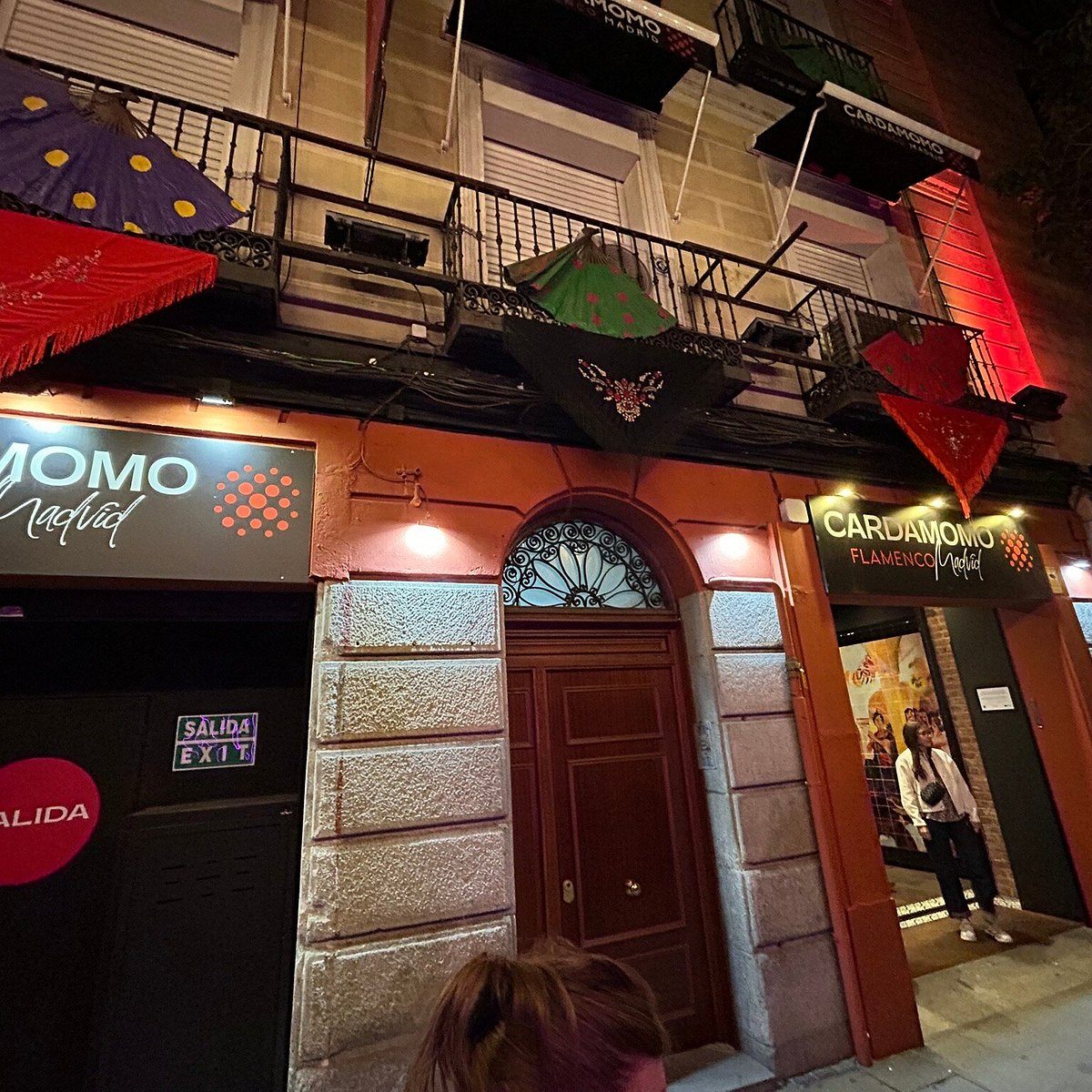
For something with more tradition and less queueing culture, Cardamomo has run nightly flamenco shows on Calle de Echegaray for thirty years, with a pre-show dinner menu for anyone who wants the full evening rather than just the performance. And for live jazz, Café Central has been the city's reference point for years — though as of April 2026 it's relocated to the Ateneo de Madrid on Calle del Prado, a change worth knowing before you go looking for the old room.
Things to do
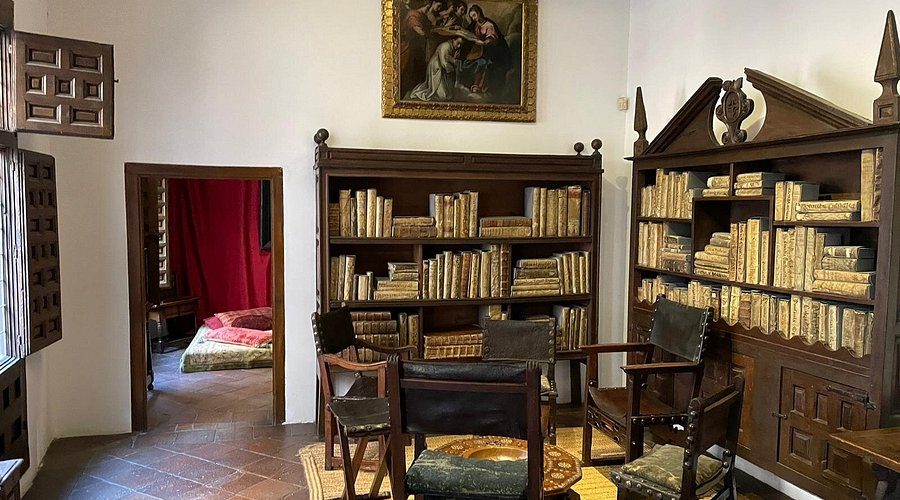
The obvious starting point is Casa Museo Lope de Vega on Calle de Cervantes — not a recreation but the actual house where the playwright lived and worked for twenty-five years, small enough to see properly in under an hour, free to visit with a guided tour, and one of the few places in Madrid where Golden Age literary history feels walk-in rather than roped-off behind glass. It's a useful corrective, too, to how easily the barrio's literary branding could have curdled into a theme: this is a real house, with real furniture arranged as it would have been, not a plaque.
Beyond that, the neighbourhood's real appeal is its position: the eastern edge is a ten-to-fifteen-minute walk from the Prado, and the same walk covers the Reina Sofía and the Thyssen-Bornemisza, which means Madrid's so-called golden triangle of art is reachable on foot, without a single metro trip, from wherever you're standing in Huertas. It rewards slow mornings more than a checklist — a coffee somewhere on Calle de las Huertas, then a wander down toward the museums when the streets have emptied out a little.
Don’t miss in Huertas / Barrio de las Letras
Plaza de Santa Ana, a historic square lined with cafes and a grand theater.
The house-museum of legendary playwright Lope de Vega.
Calle de las Huertas, a pedestrianized spine filled with jazz clubs and taverns.
Shopping
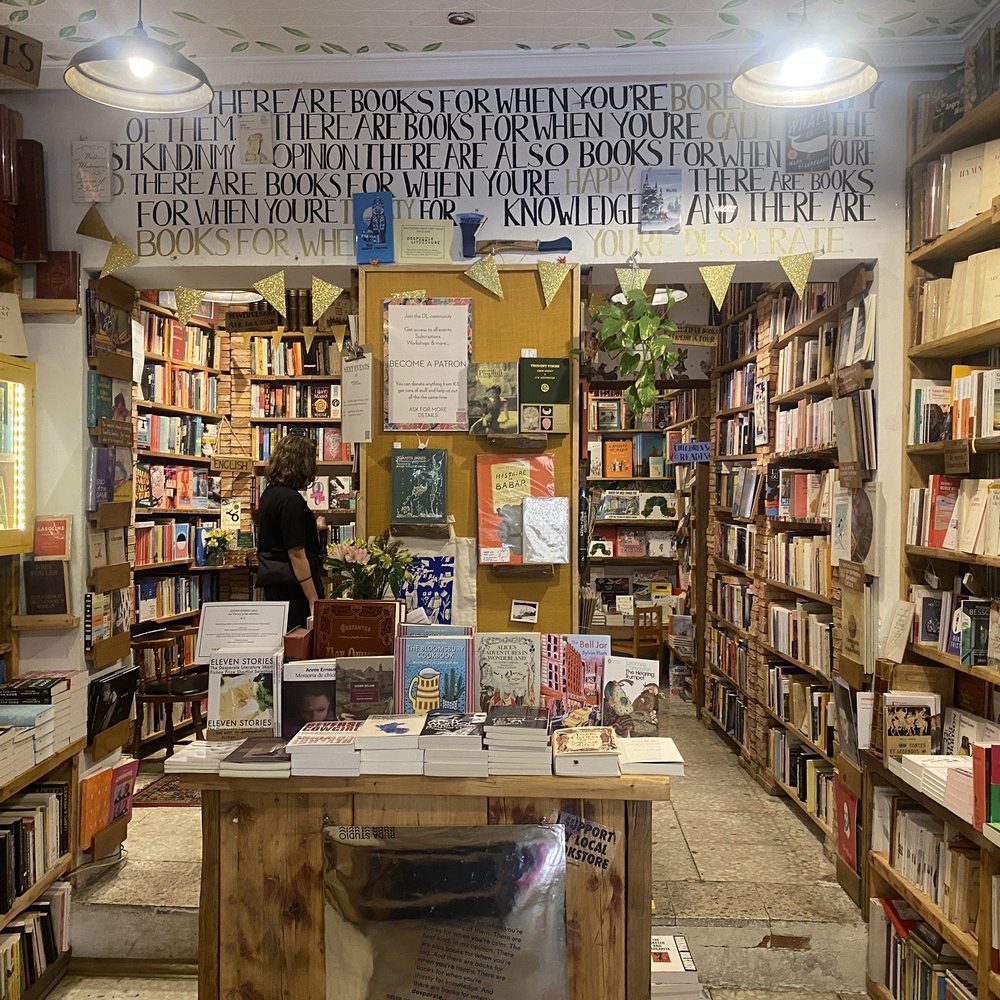
Shopping here is small-format and made for browsing rather than a destination in its own right. Secondhand and antiquarian bookshops cluster around Calle de las Huertas and Calle del León — a direct legacy of the barrio's literary identity, and the kind of shops where the stock spills slightly onto the pavement and nobody minds if you spend twenty minutes not buying anything. Vinyl record stores and small independent galleries are tucked in among them, on the same short blocks, easy to miss if you're walking with a specific destination in mind rather than looking sideways as you go.
Where to stay in Huertas / Barrio de las Letras
Where you land within the barrio changes the experience more than the barrio itself does. Streets right off Plaza de Santa Ana — Príncipe, Echegaray, Amor de Dios — put you in the loudest, most tourist-facing pocket, walkable to everything worth walking to, but the noisiest stretch on a Thursday, Friday or Saturday night; if you're booking anywhere along here, it's worth specifically asking for a room facing an inner courtyard rather than the square or the street. Calle de las Huertas itself runs the length of the neighbourhood and offers a bit more range, with quieter footing the further you get from Santa Ana. Budget-wise, this is mid-range to upscale by Madrid standards — central-location pricing applies to hotels here the way it does to restaurants — though the classic tabernas keep a caña and a tapa cheap regardless of what the room above them costs.
Where to stay here
Hotels in Huertas / Barrio de las Letras
Our best-rated stays in this neighbourhood. Prices are approximate “from” rates — confirmed at the provider when you continue. We may earn a commission if you book through our partners — at no extra cost to you.
 In this area
 In this area
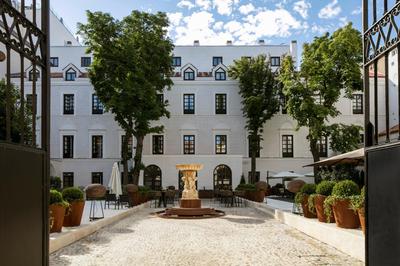
Palacio de los Duques, a Gran Meliá Hotel - The Leading Hotels of the World
 In this area
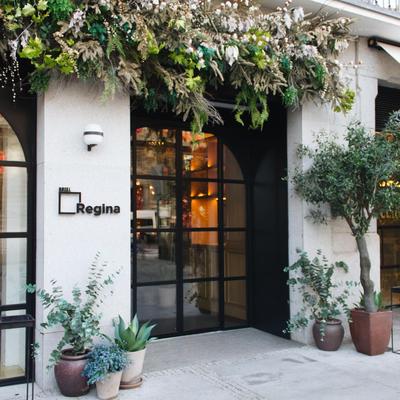
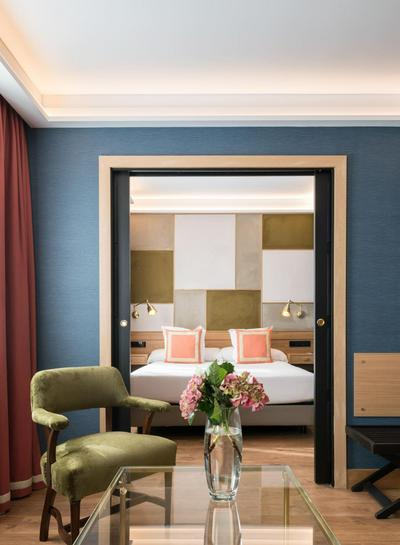
Madrid Marriott Hotel Princesa Plaza
 In this area
 In this area
 In this area
 In this area
 In this area
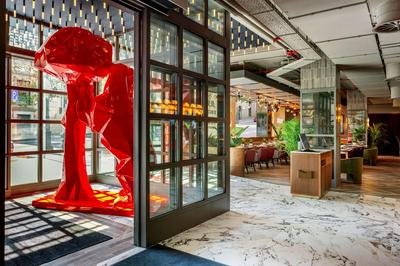
Radisson RED Madrid
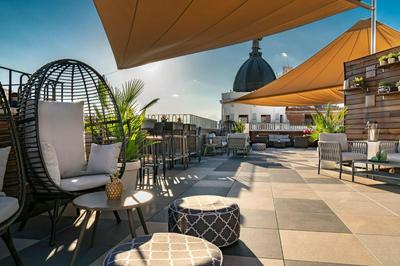 In this area
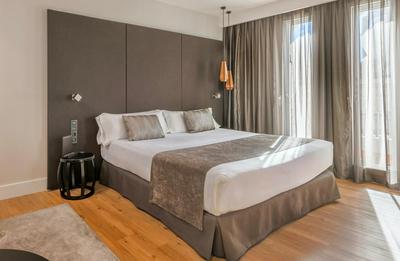 In this area
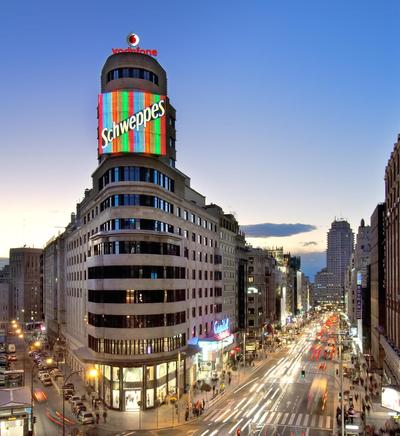
Catalonia Gran Vía Madrid
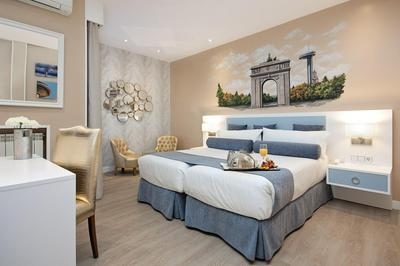 In this area
Grupotel Mayorazgo
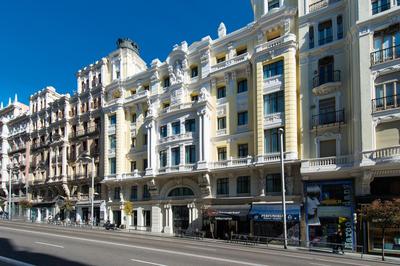 In this area
Getting around
Three metro stations effectively bracket the neighbourhood, and knowing which one you're near saves a lot of unnecessary walking. Antón Martín, on Line 1, sits on the southern edge, close to the lower end of Calle de las Huertas and to Calle de Atocha. Sevilla, on Line 2, borders the barrio to the north. And Sol — the major interchange for Lines 1, 2 and 3, plus Cercanías regional trains — is about a five-minute walk from most points inside the grid, which is really the neighbourhood's whole trick: everything central is close enough that the metro becomes optional rather than essential. If you're arriving by AVE, Atocha station is a ten-to-fifteen-minute walk from the barrio's southern streets, manageable with luggage if you're not in a hurry, and the kind of walk that eases you into the neighbourhood rather than dropping you into it.
Good to know
Huertas / Barrio de las Letras — your questions
Is Huertas / Barrio de las Letras a good area to stay in Madrid?
Yes, especially for a first visit — it's central, walkable to the Prado, Sol and the old town, and has a strong, characterful bar and restaurant scene on its own streets. The trade-off is weekend noise around Plaza de Santa Ana and Calle Echegaray, so ask for a courtyard-facing room if you're a light sleeper.
What's the difference between Huertas and Barrio de las Letras?
They're the same neighbourhood under two names. Huertas comes from Calle de las Huertas, the street running through its middle; Barrio de las Letras ('Literary Quarter') refers to the Golden Age writers, including Cervantes and Lope de Vega, who lived here. Locals and guides use both interchangeably.
Is Barrio de las Letras walkable to the Prado museum?
Yes — the eastern edge of the neighbourhood is a 10–15 minute walk from the Prado, and the same distance covers the Reina Sofía and Thyssen-Bornemisza museums, putting Madrid's 'golden triangle of art' within easy reach without needing the metro.
Is it noisy at night?
Around Plaza de Santa Ana and Calle Echegaray, yes, particularly Thursday to Saturday nights when the bar-hopping crowd is out in force. Streets further from the square, toward Calle de Atocha, are noticeably calmer.
Gallery