
Madrid's Paseo del Arte runs for barely a mile, yet it holds enough painting to occupy a lifetime of Sunday afternoons. The trick to walking it without your attention curdling by mid-afternoon isn't stamina — it's sequencing: knowing which museum to see fresh, which to save for the quiet hours, and where to sit down in between. This is the Golden Triangle done properly, mile by mile, gallery by gallery.
The Three Points of the Triangle
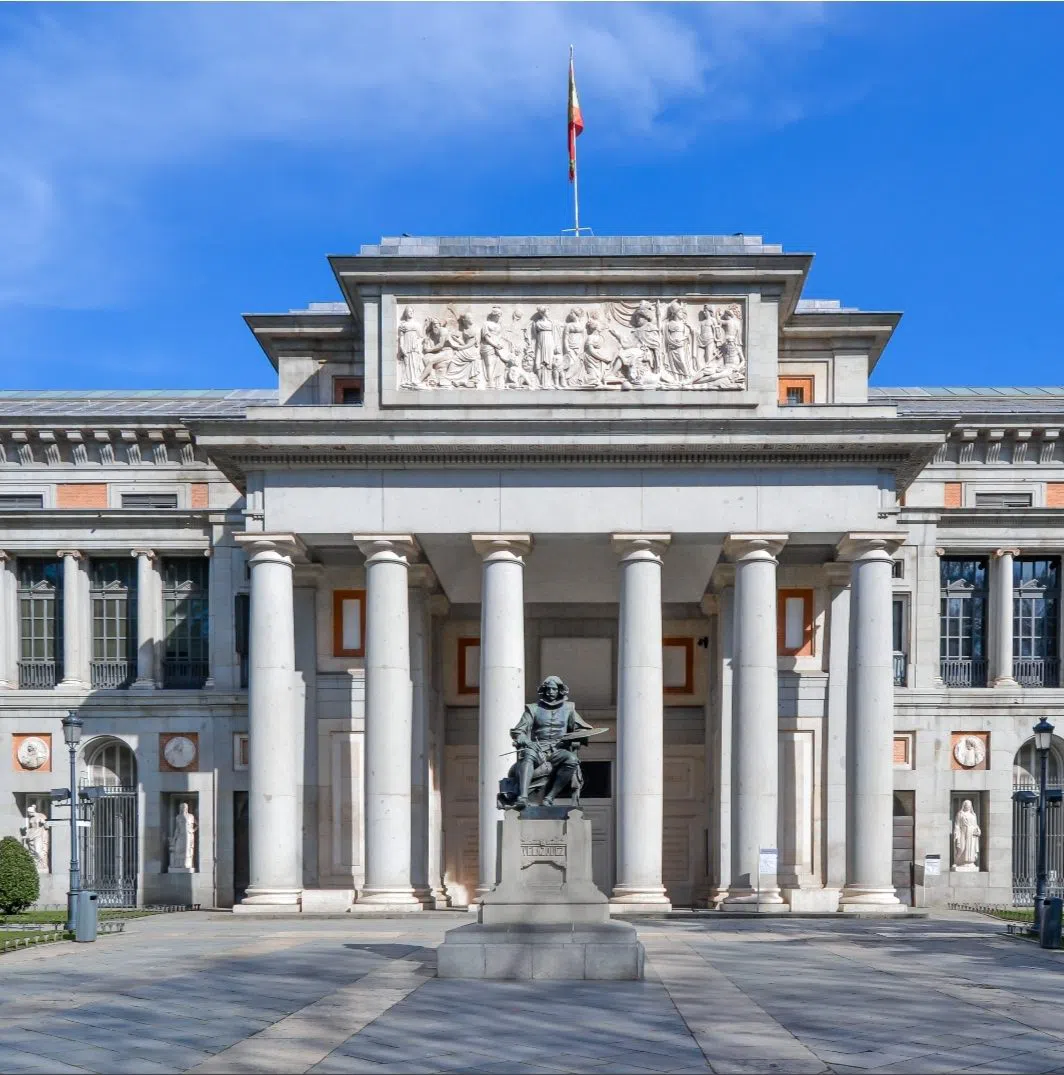
The Museo Nacional del Prado (Paseo del Prado, opposite the Jerónimos) is where this route has to start, and not out of duty. General admission is €15, with a free window Monday to Saturday from 18:00 to 20:00 that fills fast and is worth booking rather than chancing. The Prado takes pre-booked groups and guided tours as a matter of course, and with holdings running from Velázquez's court portraits to Goya's black paintings and Bosch's Garden of Earthly Delights, it rewards whatever attention you have left over from the previous night, not whatever's left after two other museums. Go in the morning. Everything else on this list can wait for a tireder version of you.
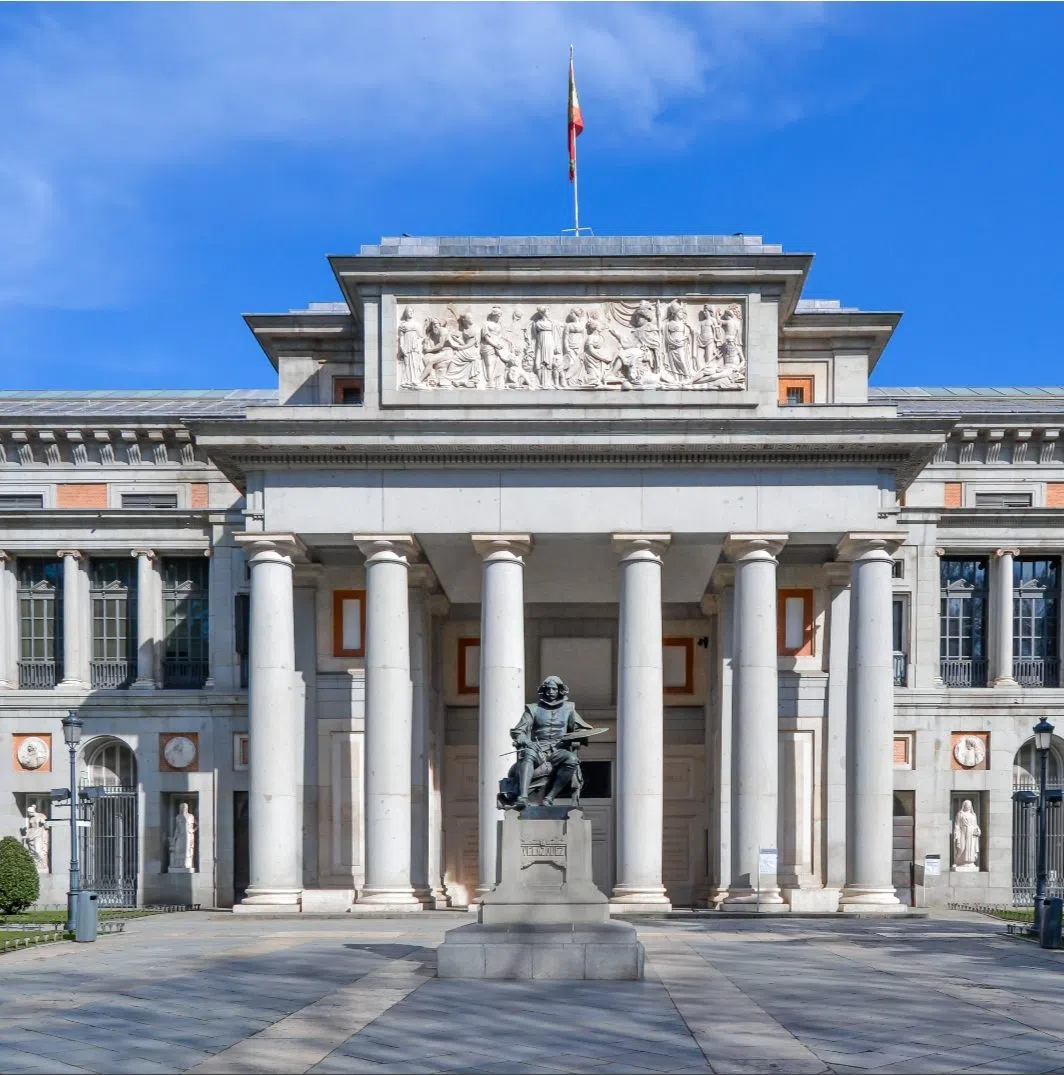
From the Prado's southern end, the walk to the Museo Reina Sofía (Atocha) takes about ten minutes on foot, past the Real Jardín Botánico. This is Madrid's modern and contemporary collection, and its centrepiece needs no introduction beyond its name: Picasso's Guernica hangs here, in a room built around the single canvas, and it's worth the walk south on its own. General admission is €12, with free entry Monday and Wednesday to Saturday from 19:00 to 21:00, and Sunday from 12:30 to 14:30. Group visits and educational tours are bookable in advance, which is worth doing given the building's popularity. The one date to build your itinerary around: the Reina Sofía is closed on Tuesdays, so if you're only in Madrid for a short run of days, don't let the Golden Triangle route fall on one.
The third point, the Museo Nacional Thyssen-Bornemisza (Paseo del Prado, opposite the Ritz), sits back across from the Prado and functions as the connective tissue between the other two. It's smaller in scale than either, which makes it markedly easier for guided groups to move through without the bottlenecks that build up at the Prado's star canvases, and its collection is hung chronologically — a private one, assembled by the Thyssen-Bornemisza family over the twentieth century, that moves in a clean line from early Renaissance panels through to twentieth-century abstraction. That linear hang is, in practical terms, the antidote to whatever fatigue the other two have built up: it asks less of you room to room, filling the historical gaps the Prado and Reina Sofía leave open rather than competing with them for the same ground. General admission is €13, with a free window every Monday from 12:00 to 16:00.
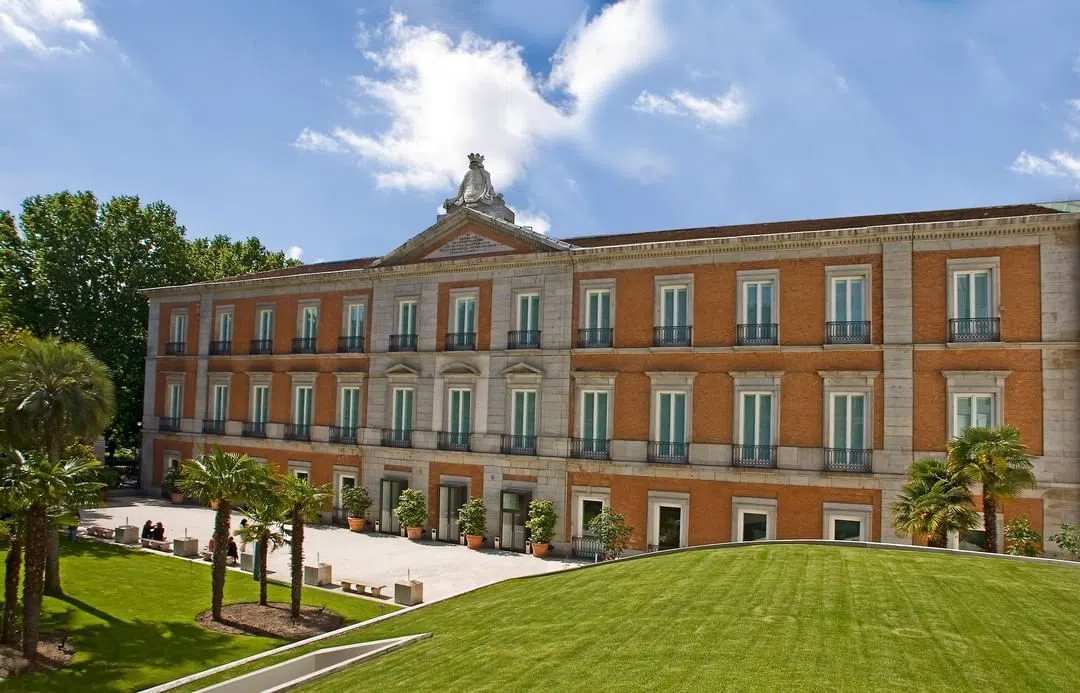
Done in sequence — Prado in the morning, Thyssen-Bornemisza after lunch, Reina Sofía in the free evening hours or as a separate half-day — the triangle stops feeling like an endurance test and starts feeling like what it is: three distinct collections, each built by a different logic, within footsteps of each other.
Breathing Room on the Paseo del Prado
The walk between the big three is where the route either holds together or falls apart, and the Paseo del Prado has enough along its length to make the gaps useful rather than dead time.
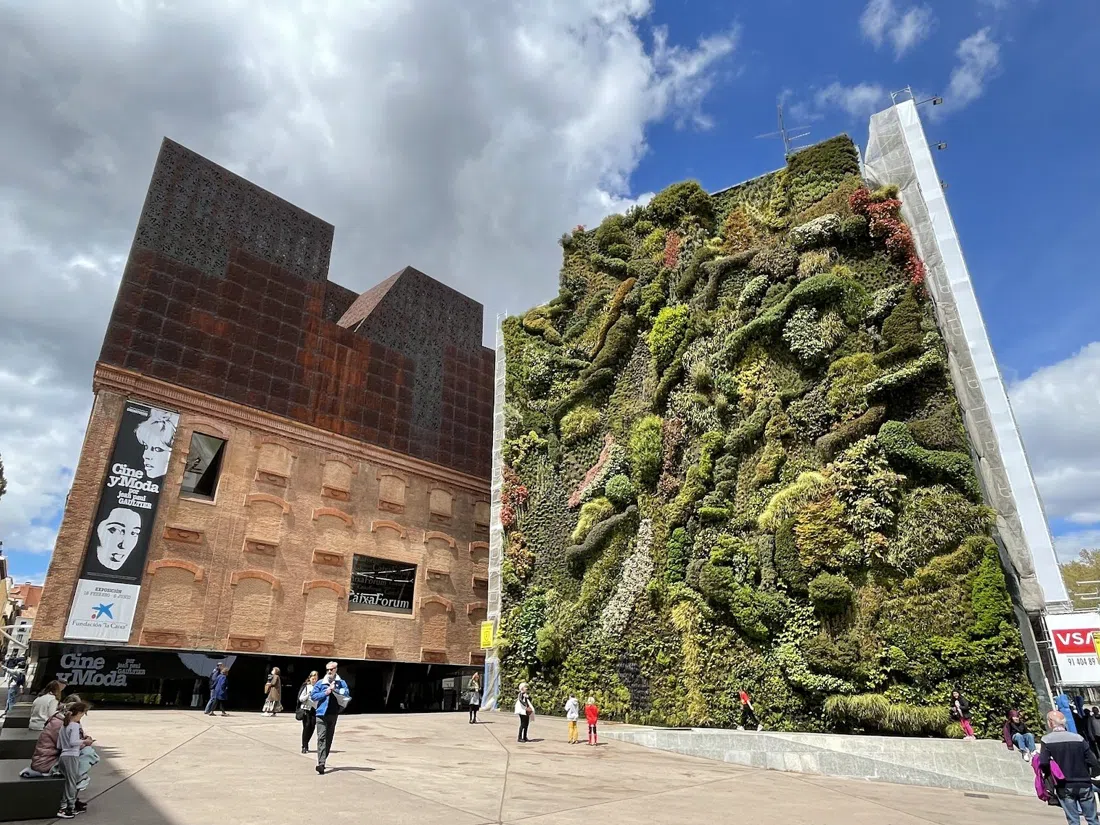
CaixaForum Madrid sits at the Prado's south entrance, close enough that it functions as a natural pause rather than a detour. Admission is free, which removes the booking friction that can slow down larger parties elsewhere on this list, and it takes groups without difficulty. The building itself is worth the stop before you've seen a single exhibition: a converted power station fronted by a vertical garden that's become one of the boulevard's fixed landmarks. It's a good five minutes to reset your eyes between the Prado's density and whatever comes next.
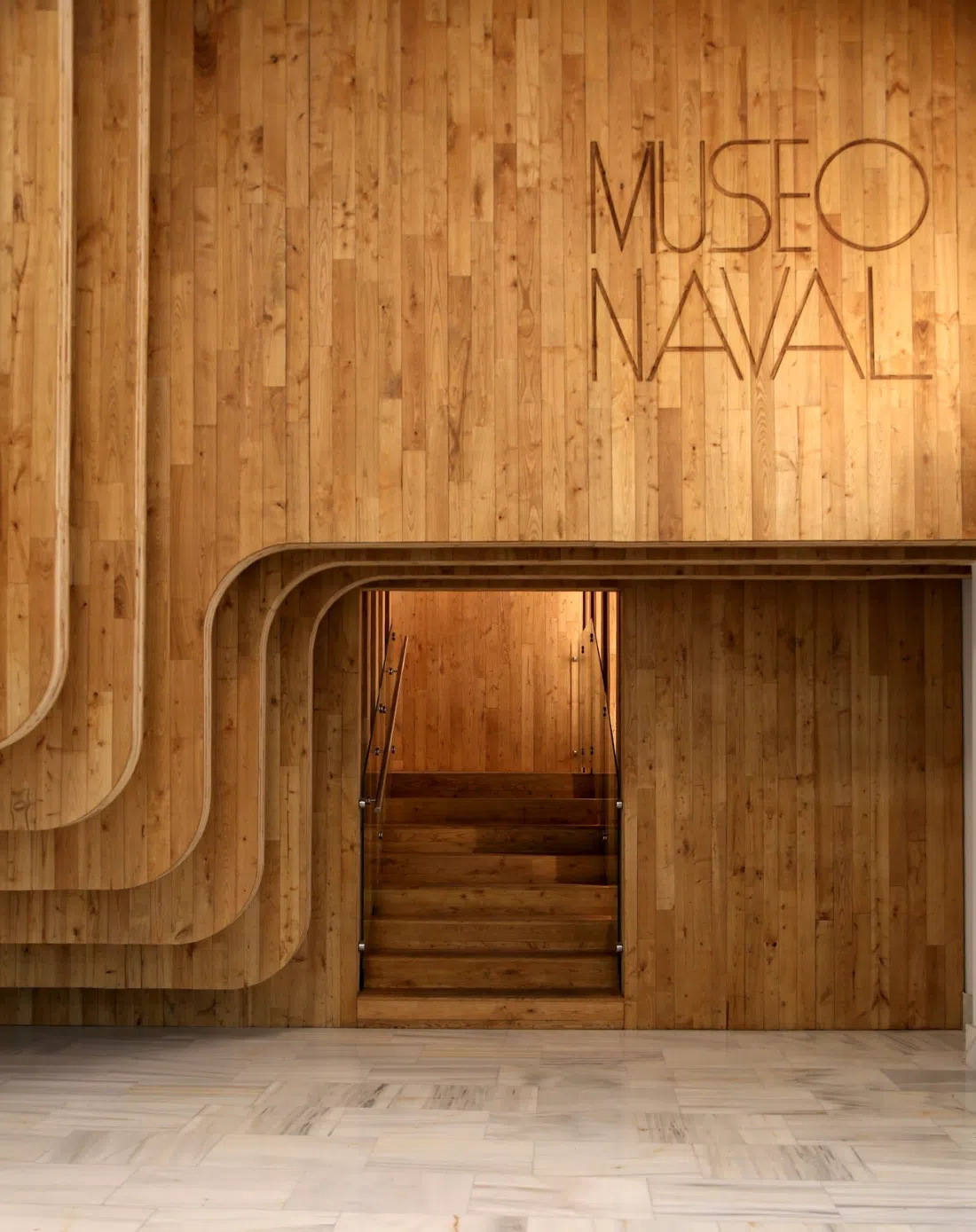
A short walk further along, the Museo Naval de Madrid offers a genuinely different register of collection — maritime art, ships' models, and historical cartography, reopened after renovation and now sitting directly on the Paseo del Prado. Entry is free (a €3 donation is suggested but not required), which makes it an easy, low-effort call for groups who want a breather without committing another museum's worth of concentration. It won't be the reason anyone plans a trip to Madrid, but as a quiet twenty minutes between two more demanding stops, it does its job well.
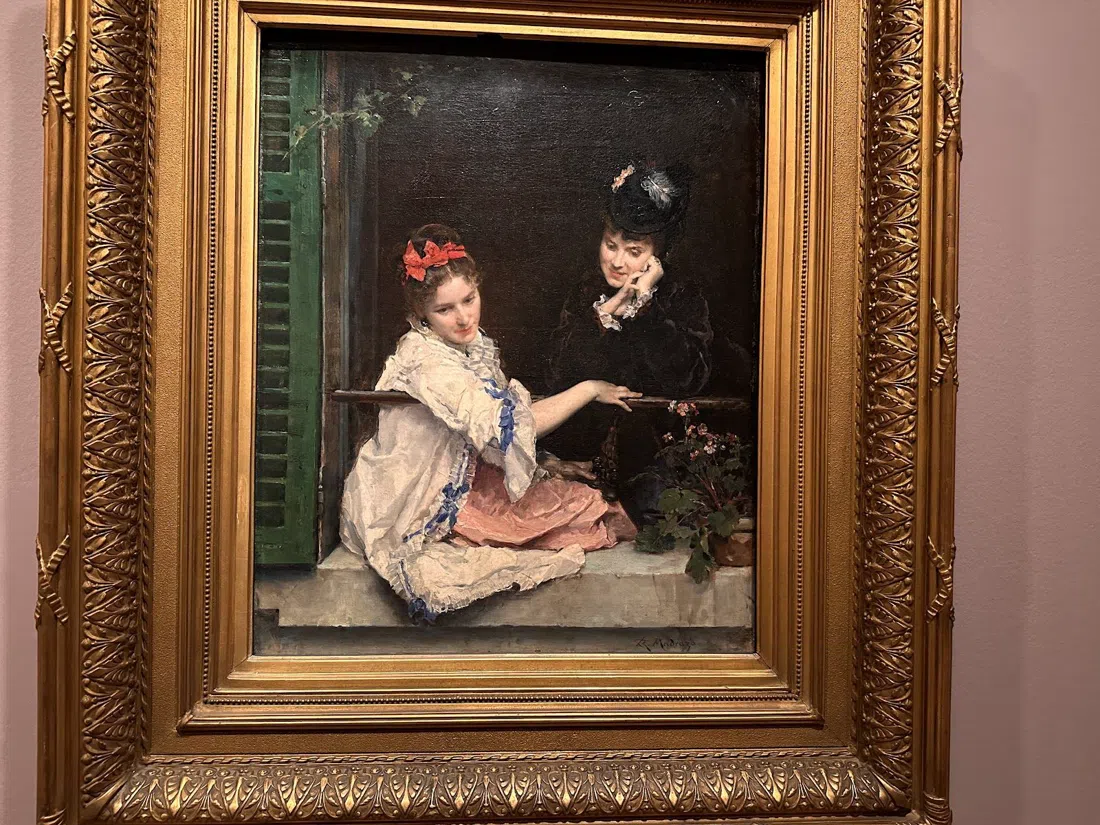
Where the Paseo del Prado becomes the Paseo de Recoletos, Fundación MAPFRE – Sala Recoletos runs some of the city's strongest rotating photography programming, with a Walker Evans exhibition on the 2026 calendar. General admission is €5, free on Tuesdays (excluding holidays), and the foundation takes groups. It's a fraction of the cost and crowd of the big three, and worth building into the walk precisely because it isn't painting — a change of medium partway through a day that's otherwise all canvas.
A hotel within walking distance of this stretch does more for the itinerary than almost anything else you'll book — Madrid hotel search covers options along and near the Paseo del Arte itself, which turns a one-mile museum route into something you can walk out your front door for.
Off the Main Axis: Quieter Stops for Connoisseurs
Two museums on this list sit slightly off the Paseo del Prado's straight line, and both reward the readers willing to take the short detour — precisely because most visitors don't.
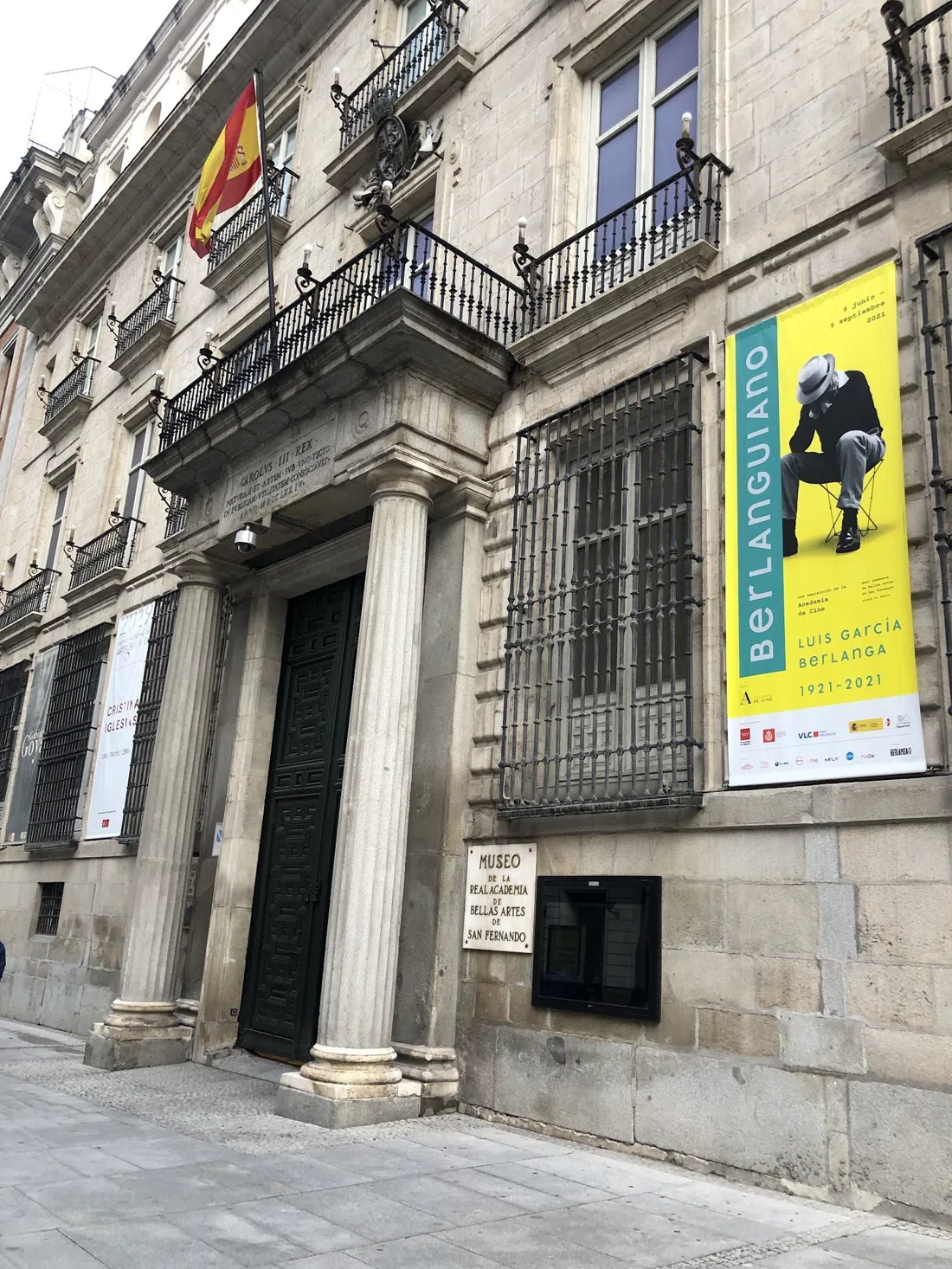
Toward Puerta del Sol, the Real Academia de Bellas Artes de San Fernando holds a Goya collection with none of the Prado's queues, a consequence of low visitor numbers rather than a lesser collection. General admission is €10, with free entry Wednesdays and for under-18s at any time — a schedule that makes it naturally suited to smaller groups who can move through the rooms without needing timed slots. One planning note worth flagging clearly: the academy closes for the whole of August, so this stop only works outside that window.
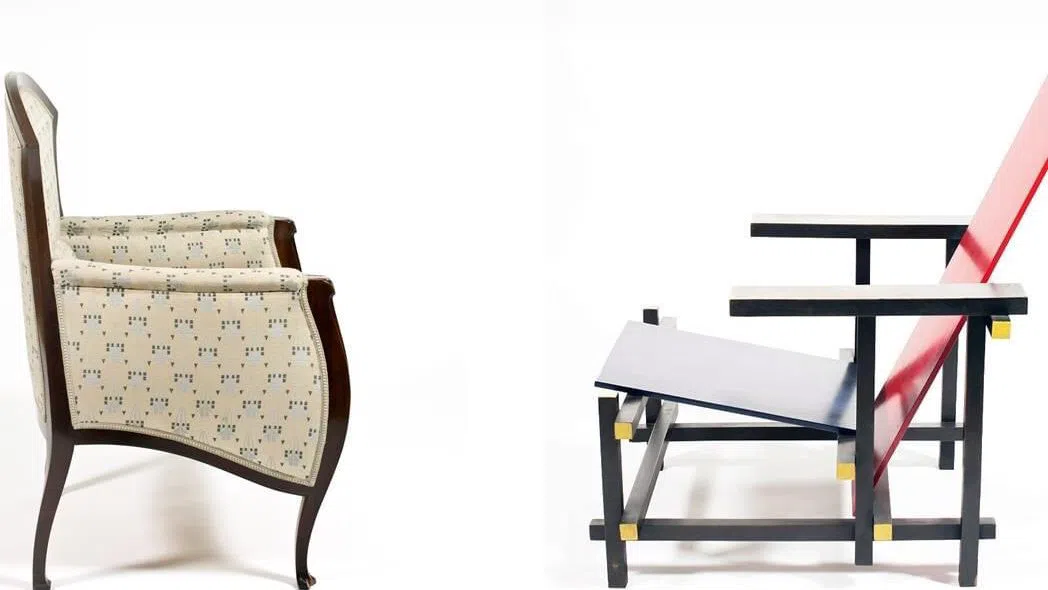
Between the Prado and Retiro Park, the Museo Nacional de Artes Decorativas shifts register entirely, from painting galleries to five floors of furnished period rooms — a museum of interiors rather than canvases, better suited to smaller groups given its room-by-room layout rather than open gallery space. Admission is €3, free on Thursday evenings, Saturday afternoons after 14:00, and all day Sunday. It's the cheapest stop on this list and, for readers who've spent a day looking at paint, one of the more effective changes of pace: rooms built to be lived in, not looked at from a rope's distance.
North to Cibeles: A Rooftop to Finish
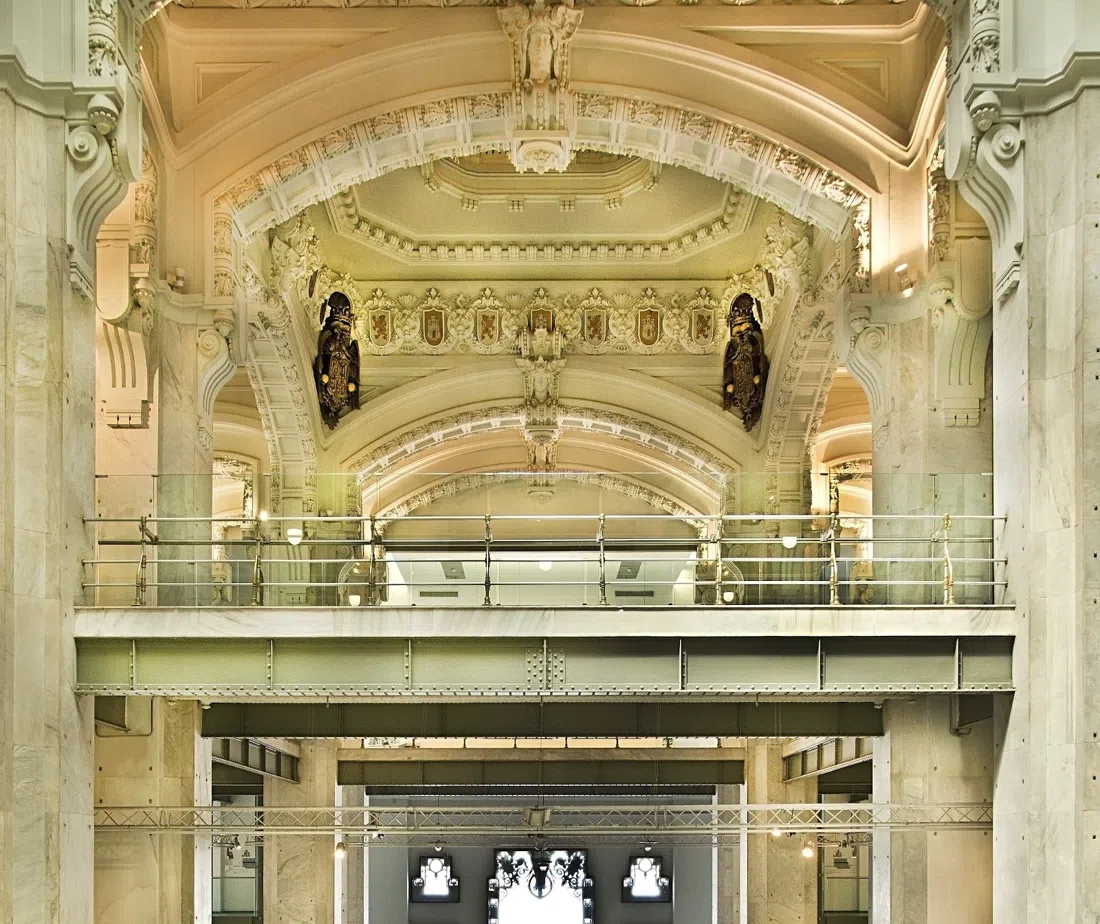
Where the Paseo del Prado meets Plaza de Cibeles, the axis effectively ends, and CentroCentro Palacio de Cibeles makes a natural place to close the day. Exhibitions here are free, and the building takes groups without difficulty, though it's worth knowing that floors three to five are closed for maintenance from May 2026 — floors one and two, along with the rooftop mirador, remain open throughout. The mirador is the reason to come: a small paid climb for a view back down the whole length of the route you've just walked, museum by museum, laid out along the boulevard below.
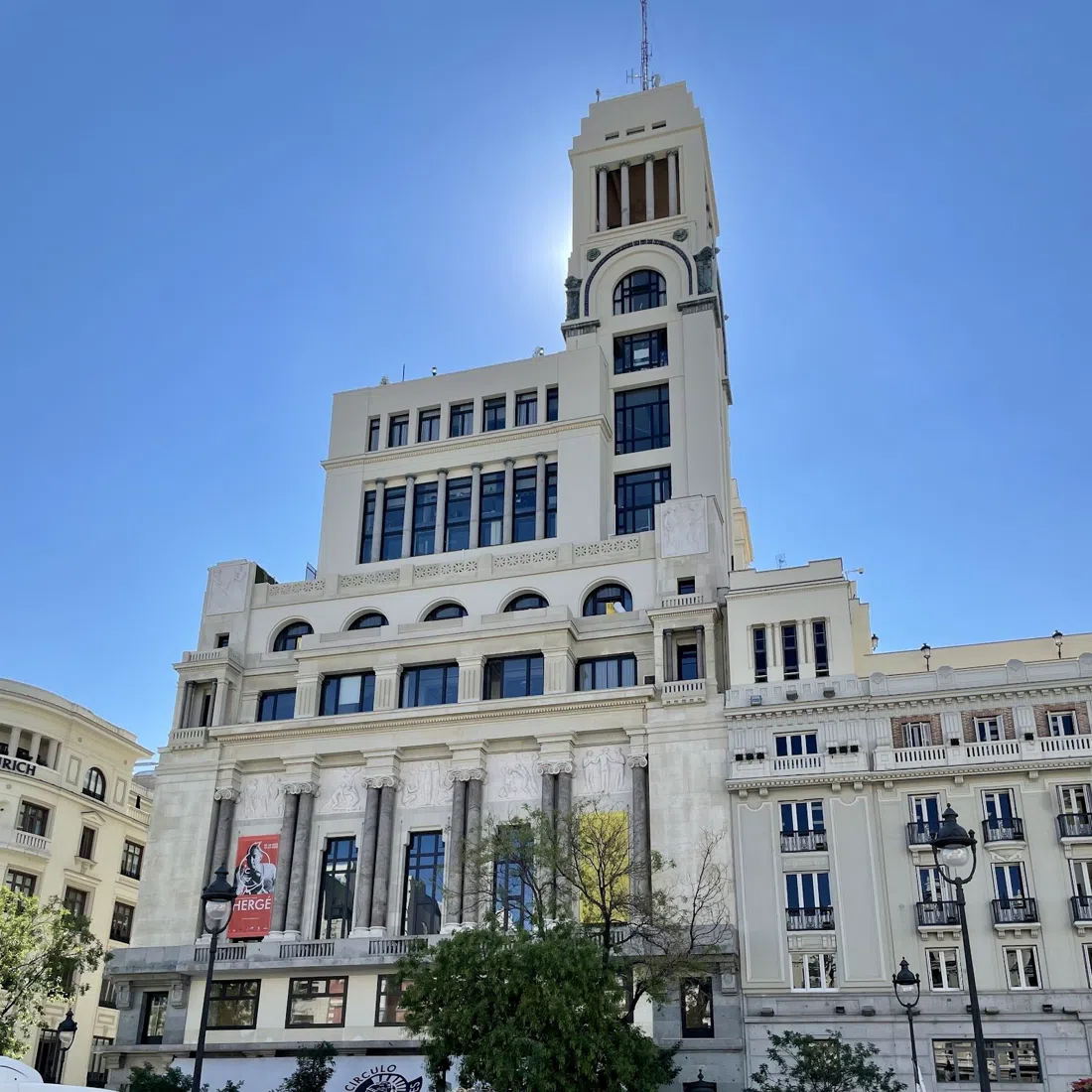
Five minutes on from Cibeles, the Círculo de Bellas Artes is celebrating its centenary in 2026 with a dedicated exhibition programme, and its €5 day pass covers both the exhibitions and the rooftop terrace — a proper finishing point rather than another gallery to concentrate through. It takes groups, and unlike the museums further south, nobody's expecting you to look closely at anything once you're up there. After a day spent between the Prado, Reina Sofía and Thyssen-Bornemisza, that's precisely the point.
For the wider context of what else the city offers beyond this route, the Madrid guide covers the neighbourhoods, food and transport that sit around the Golden Triangle without overlapping this itinerary.
Practical Notes
Transport. The whole route, from the Prado to Cibeles, covers roughly a mile and a half and is entirely walkable — no metro required between stops. Atocha (Reina Sofía) and Banco de España (Thyssen-Bornemisza/Cibeles end) are the two metro stations that bracket the axis if you're arriving from elsewhere in the city or need to cut the walk short partway through.
Cash. Museum admission is almost universally by card, but the Museo Naval and smaller venues on this list suggest voluntary donations that are easiest to leave in cash — a few euros in coins is worth carrying for that reason alone.
Timing. Build the day around the Reina Sofía's Tuesday closure first, then work backward: Prado in the morning while attention is freshest, Thyssen-Bornemisza after lunch, and either the Reina Sofía or the CentroCentro mirador in the evening free-entry windows. The Real Academia de Bellas Artes de San Fernando is only viable outside August, given its closure for the month.
Budget. A full day covering all three major museums at standard admission runs to roughly €40 per person before the smaller free or near-free stops; timing visits around the free evening and Monday windows at the Prado, Reina Sofía and Thyssen-Bornemisza can bring that close to zero, at the cost of needing to plan around specific hours rather than turning up whenever suits.