The Madrid issue
Day Trips from Madrid Worth Taking on a First Trip to Spain
Fast trains to walled towns, and royal gardens a short ride out, with the fares, ticket prices and timings you need to choose between them.

By Lieke DoornWalking routes, quiet hours and the barrios worth slowing down in
Madrid sits in the middle of the Meseta with fast rail running out of it in every direction, which means the plateau's walled towns, granite palaces and cliff-top old quarters are all closer than they look on a map. Toledo is thirty-three minutes from Atocha; Segovia is under half an hour from Chamartín. On a first trip to Spain you can give the capital the days it deserves and still fit four or five of these into the diary without ever repacking a bag.
What follows is grouped the way you would actually plan it, by how far out each one is and what sort of day it makes, rather than by any order of merit. Fares and entry prices are 2026 figures, and anything seasonal or under restoration is flagged. For where to base yourself between trips, the Madrid guide covers the city itself.
The three that fit inside a morning's train ride
Toledo (Castilla-La Mancha, 70 km south) is thirty-three minutes door-to-door on the Avant from Atocha, and a return runs €13.90 to €18. It was the seat of the Castilian court until Philip II moved the capital to Madrid in 1561, and the old town has stayed dense and steep ever since, a granite bowl inside a loop of the Tagus. Give it an hour of aimless walking before you go looking for anything specific. The Catedral Primada charges €12, or €8 for over-65s, and through 2026 is running Primada, its VIII Centenario exhibition marking eight hundred years since construction began. The town itself needs no booking, and both the cathedral and the Alcázar absorb coach parties daily, though for 2026 groups should reserve cathedral entry slots ahead rather than arriving fifteen-strong and hoping. Take an early train. The day-trip crowd lands late morning and thins by five, and the last hour of light on the walls is worth staying for.
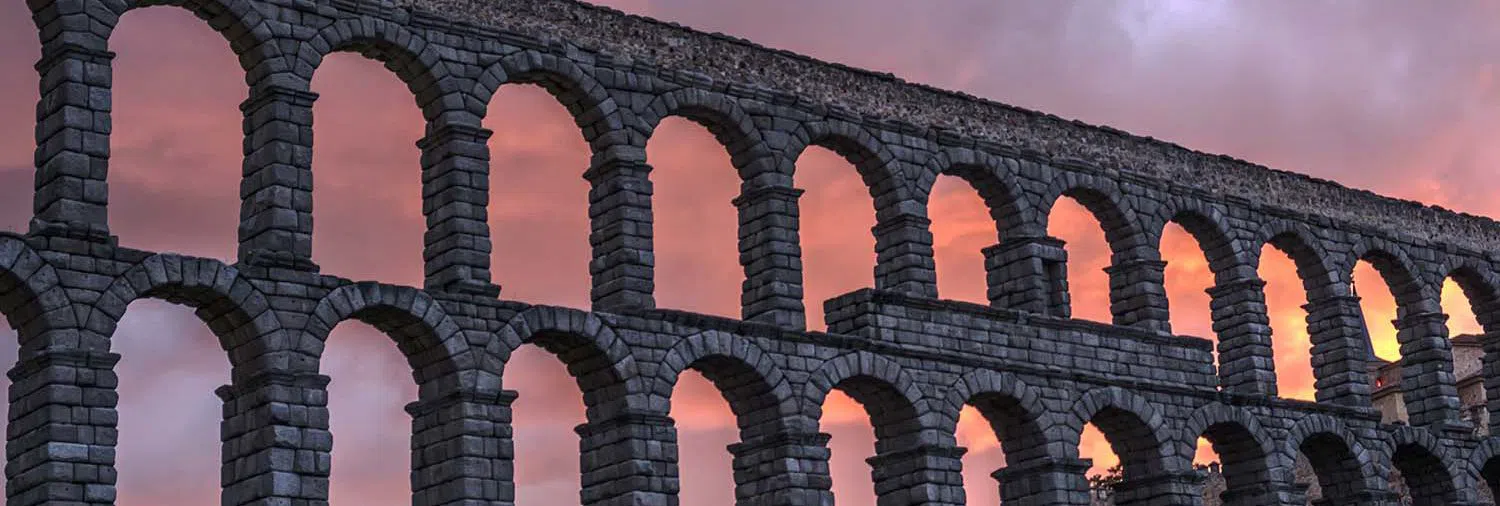
Segovia (Castilla y León, 90 km north) is roughly twenty-eight minutes from Chamartín to Segovia-Guiomar since Renfe raised line speeds, with returns around €25 to €30. Guiomar is out of town, so add the shuttle bus and about fifteen minutes at each end to your plan. This is where people misjudge the return train. The Roman aqueduct still carries its two tiers across the Plaza del Azoguejo without mortar, and restoration work on the Virgin niche may mean scaffolding on the central pillar when you arrive. The Alcázar costs €10 for the full visit including the Torre de Juan II, or €2.50 for the tower alone, and publishes group and trade rates through entradas.alcazardesegovia.com. Lunch is the other half of the day: the mesones around the Plaza Mayor are built around roast suckling pig and long tables, so a party of eight or ten is straightforward to seat.
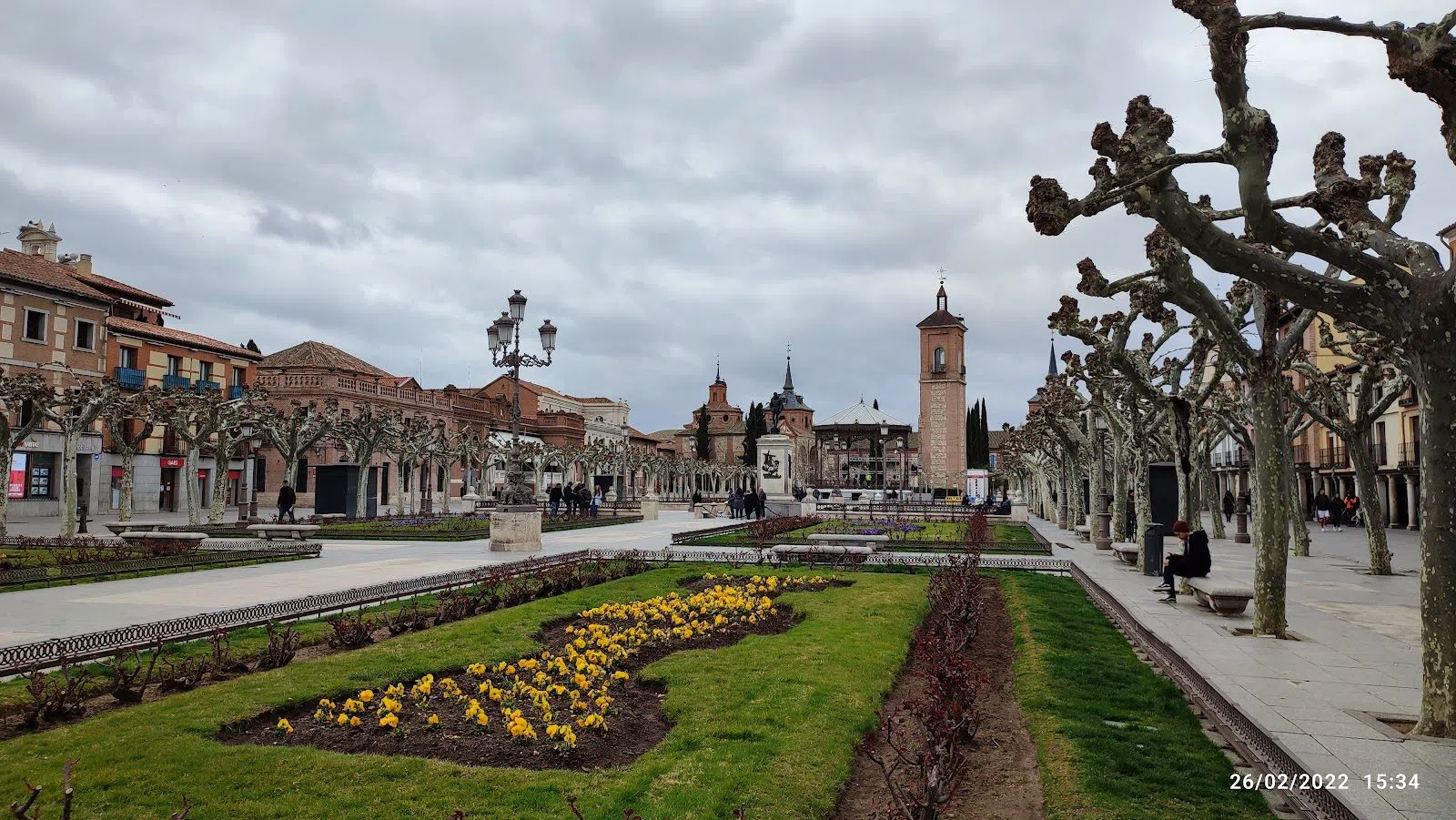
Alcalá de Henares (Comunidad de Madrid, 35 km east) is thirty-five minutes on the Cercanías for about €8 return, which makes it the cheapest serious trip on this list. Cervantes was born here in 1547, and the university Cardinal Cisneros founded in 1499 still frames the town's long arcaded main street. The Casa Natal museum costs nothing. The university's guided-visit service runs fixed hourly slots Tuesday to Sunday and takes bookings by phone or email, with an English-language slot on Saturdays at 14:00. That hourly structure makes it one of the easier places to move a group through without improvising. A half-day here pairs cleanly with an afternoon back in Madrid.
Plan your Madrid trip
Live prices from our booking partners.
Free cancellation on many rooms. We may earn a commission when you book.
Palaces the kings built to get out of the city
Real Monasterio de San Lorenzo de El Escorial (Sierra de Guadarrama foothills, about an hour by Cercanías or bus) is Philip II's palace, monastery and royal mausoleum in a single slab of grey granite, laid out on a grid that reads as austere until you stand in the library and understand what it was for. Entry is €14, or €7 reduced for ages 5 to 16, students up to 25 and over-65s. It closes on Mondays and opens 10:00 to 19:00 from April to September, 10:00 to 18:00 from October to March. Patrimonio Nacional runs group and school rates with tailored routes on request, subject to availability, and group slots need booking in advance. Allow three hours inside; the village outside has enough restaurants to make it a comfortable half-day rather than a rushed one.
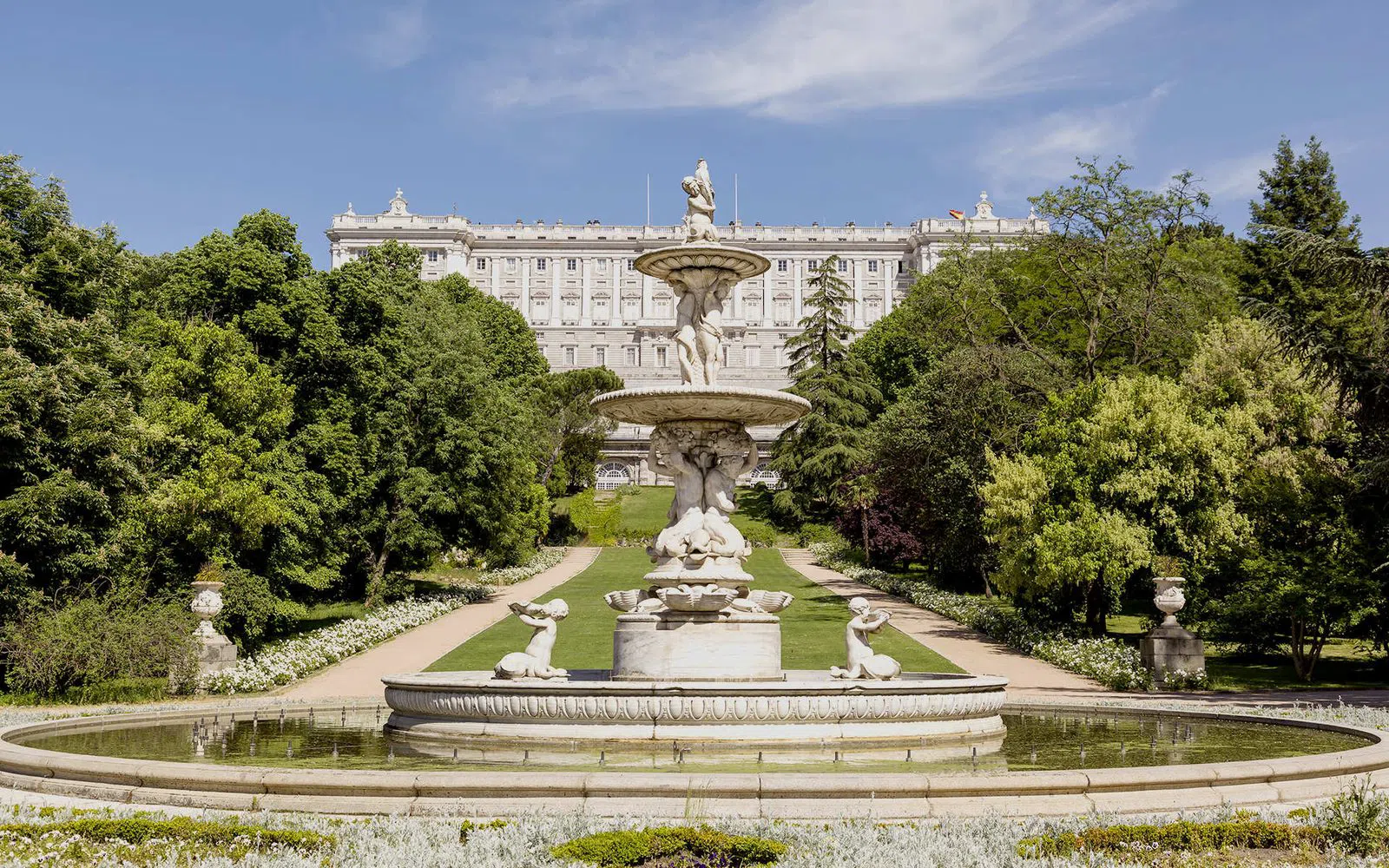
Aranjuez (Tagus riverside, south of the city) is the flat, shaded option, reached on the Cercanías C-3 from Atocha for under €10 return. The palace is €12, €7 reduced, and the gardens are free and open to all, which means a group can spread out along the river without anyone holding timed tickets. In July and August that shade is not a small consideration. If your dates line up, the historic Tren de la Fresa runs 22 March to 8 November 2026 in century-old wooden carriages with costumed conductors, at €32 to €60 adult return. It is a slower, more theatrical way in than the commuter line, and worth booking early.
Real Sitio de La Granja de San Ildefonso (11 km from Segovia) answers El Escorial's granite with baroque: a palace below a hillside of fountains fed entirely by gravity. The fountains only run on set dates, roughly fifty displays between April and July 2026, with special firings on 30 May, 25 July and 25 August at 17:30. Tickets are €5 plus booking fee, or €3 for the night displays, and the palace ticket is separate. The restored Cascada Nueva was due to rejoin the circuit from June. Because displays are ticketed by date, buy the whole party's tickets together for one specific run, since splitting up and meeting later does not work here. It works best appended to a Segovia day rather than made into a trip of its own.
Two towns that reward a slower day
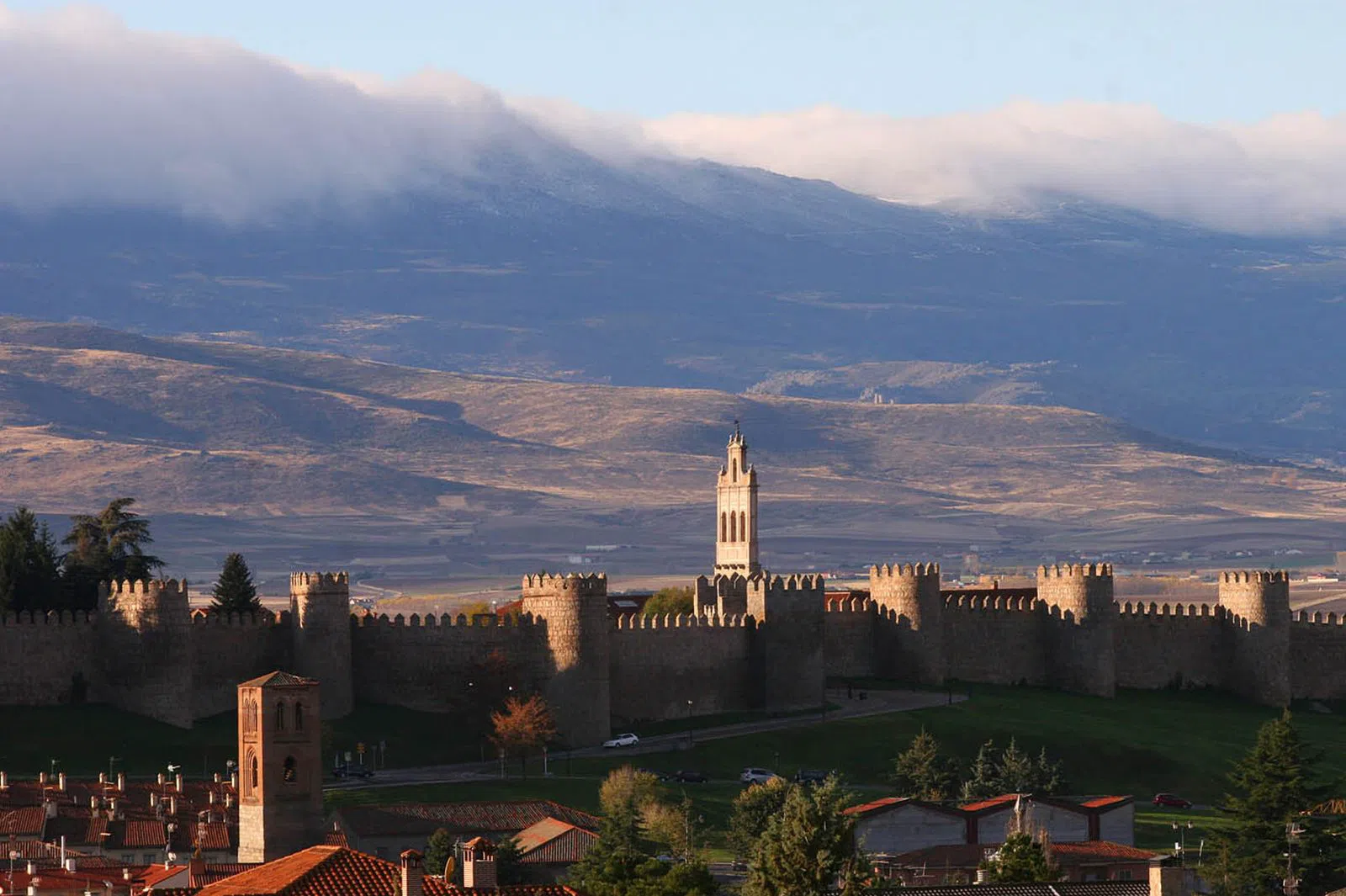
Ávila (Castilla y León, about 1h30 by train, roughly €25 return) is ringed by a medieval wall that survives almost complete, and 1.7 km of it is walkable at €8, reduced €5, free for under-12s. There are four separate access points, so a large party can be split rather than queued, and over half the circuit is wheelchair-accessible. The town is quieter than the closer options and moves at a different pace, which is the reason to come: a morning on the ramparts, a long lunch, an afternoon train back. Teresa of Ávila was born here in 1515 and the town has organised itself around that memory ever since.
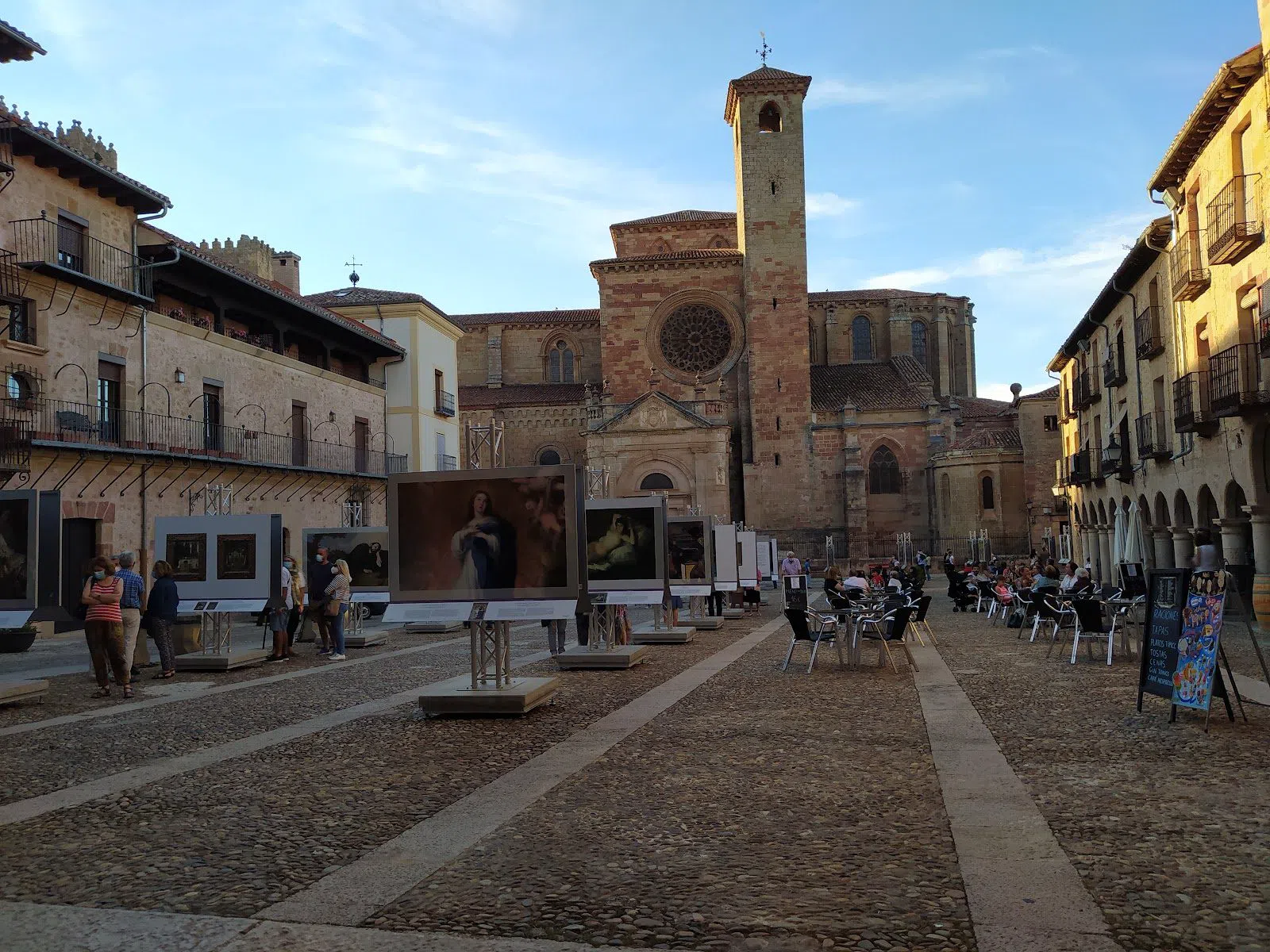
Sigüenza (Guadalajara province) is a small cathedral town with a parador installed in its castle, and the simplest way to reach it is Renfe's Tren Medieval, which leaves Chamartín at 10:00 and returns at 19:45, with guides in period dress meeting the train. It runs on set dates only, so check the calendar before building a day around it. The package includes costumed municipal guides, and cathedral audio-guide visits are discounted for train ticket holders; the necropolis visits run at weekends at 11:30, 12:30 and 17:30. For a group that would rather not plan, the day arrives ready-made.
A square, a castle and a ridge of windmills
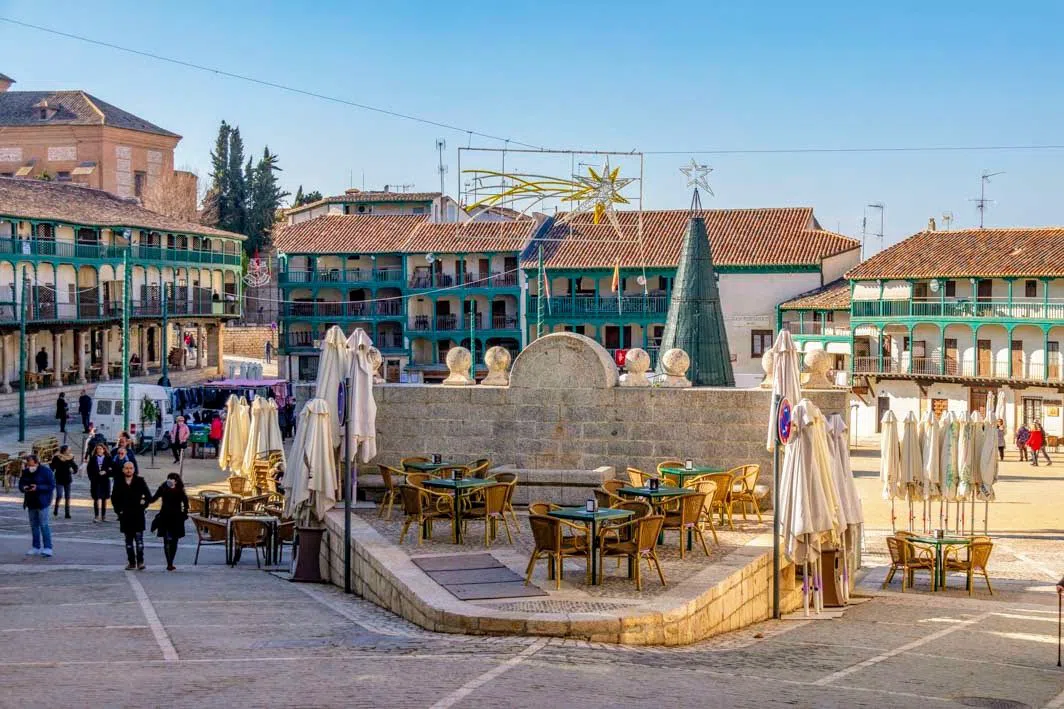
Chinchón (southeast of Madrid, about 1h15 by bus) is an eating trip and makes no pretence otherwise. Its circular plaza mayor, ringed with wooden balconies, is lined with mesones serving whole roast lamb at long tables; budget €30 to €50 a head and book ahead at weekends, when the square fills with Madrid families doing exactly the same thing. Bus 337 costs around €5 each way. The Conde de Casal terminus is under construction, so services currently leave from Pavones metro instead. Check before you set out, because this is the kind of detail that turns a lunch into a lost morning.
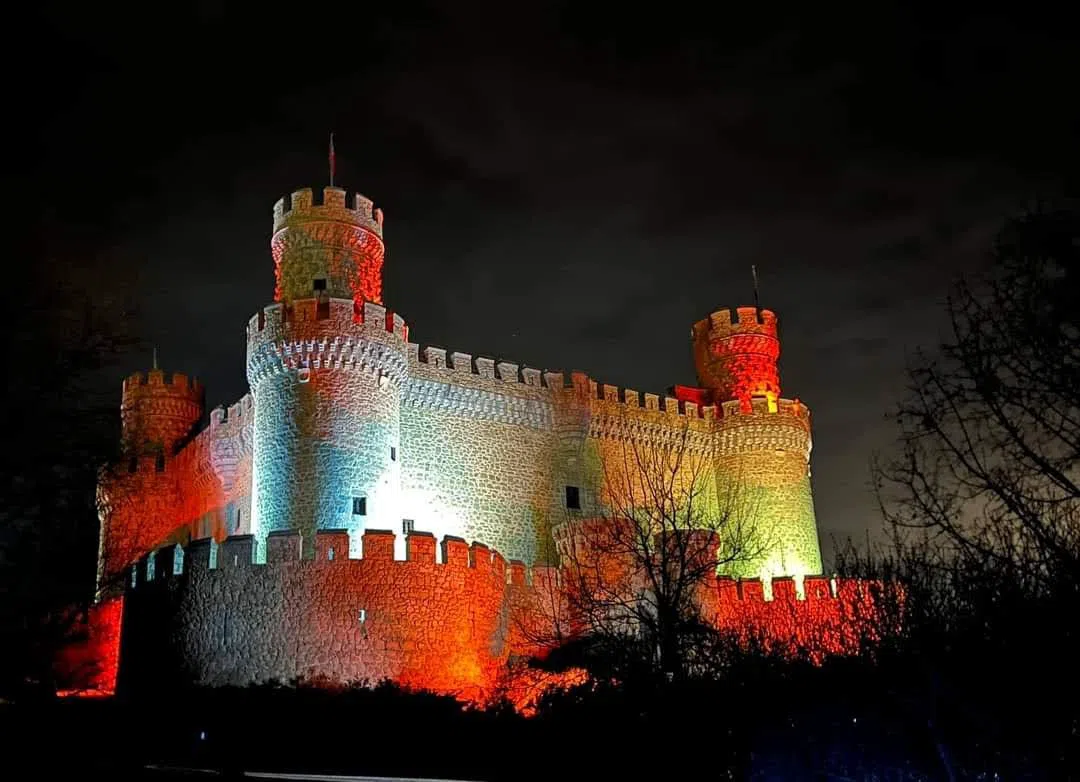
Castillo de Manzanares el Real (Sierra de Guadarrama, bus from Plaza de Castilla) is the best-preserved castle in the Madrid region, a fifteenth-century block above a reservoir, and the one entry here that combines a monument with a proper mountain walk. La Pedriza's granite domes start at the edge of the village. Entry is €5, €3 concessions, or €8 with a theatrical performance, and it closes on Mondays. One catch: free-visit tickets are sold at the box office only, never online, so a large party should either arrive early or book a guided slot in advance.
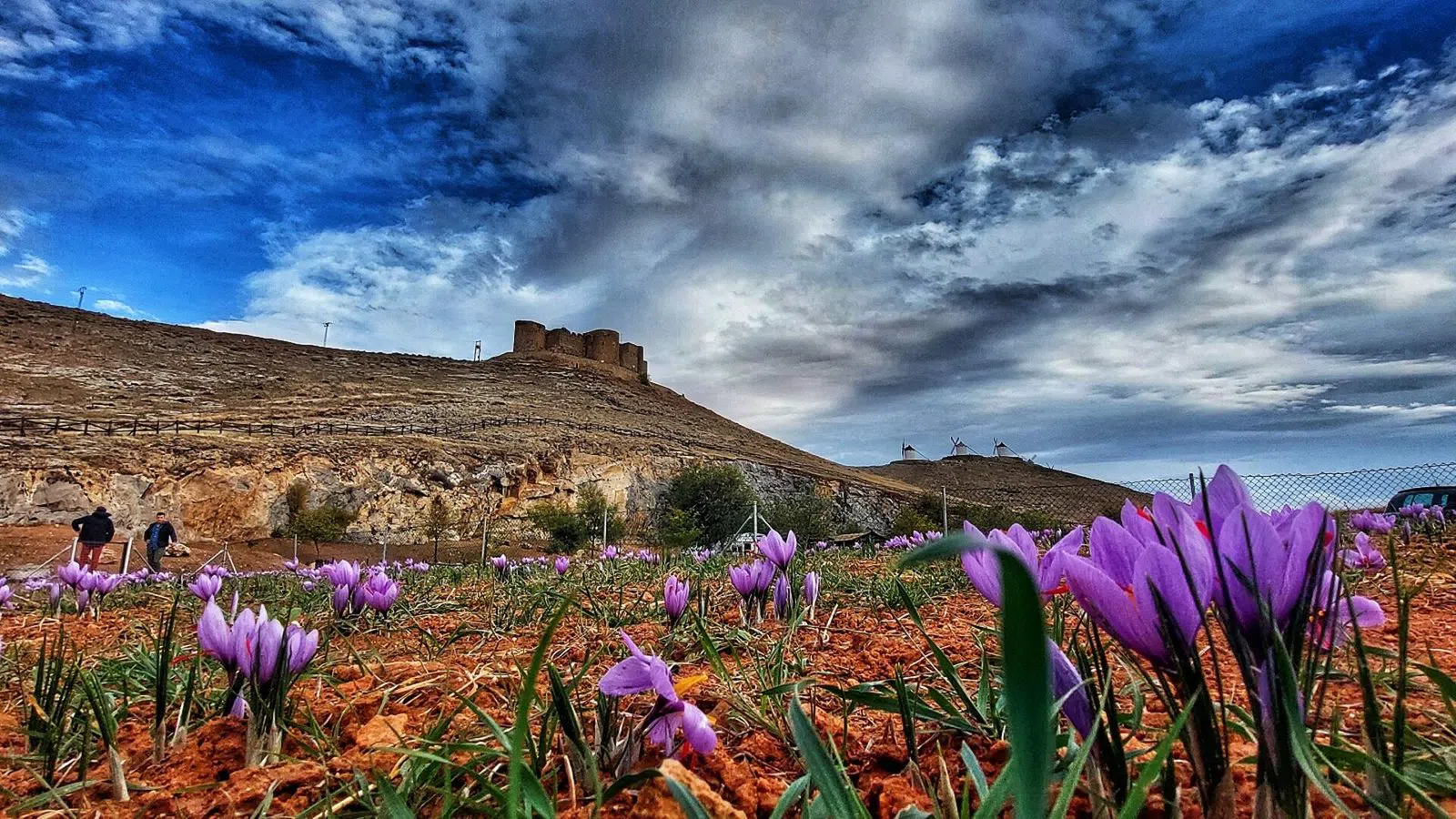
Molinos de Consuegra (Castilla-La Mancha, on a ridge south of Toledo) is the row of whitewashed windmills below a castle that most people have in mind before they arrive in Spain. There is no useful train, so it needs a car or an organised tour and should be treated as a full day. The ridge itself is open ground with room for any size party and costs nothing to walk; a combined castle and mill ticket is €9 adult, €4.50 for ages 7 to 14, and a guided visit is €7. Guided visits run at weekends and on public holidays, with group bookings by phone or email to the town hall. The Molino Bolero doubles as the tourist office, open 09:00 to 19:00 in summer.
Longer hauls that still come back the same night
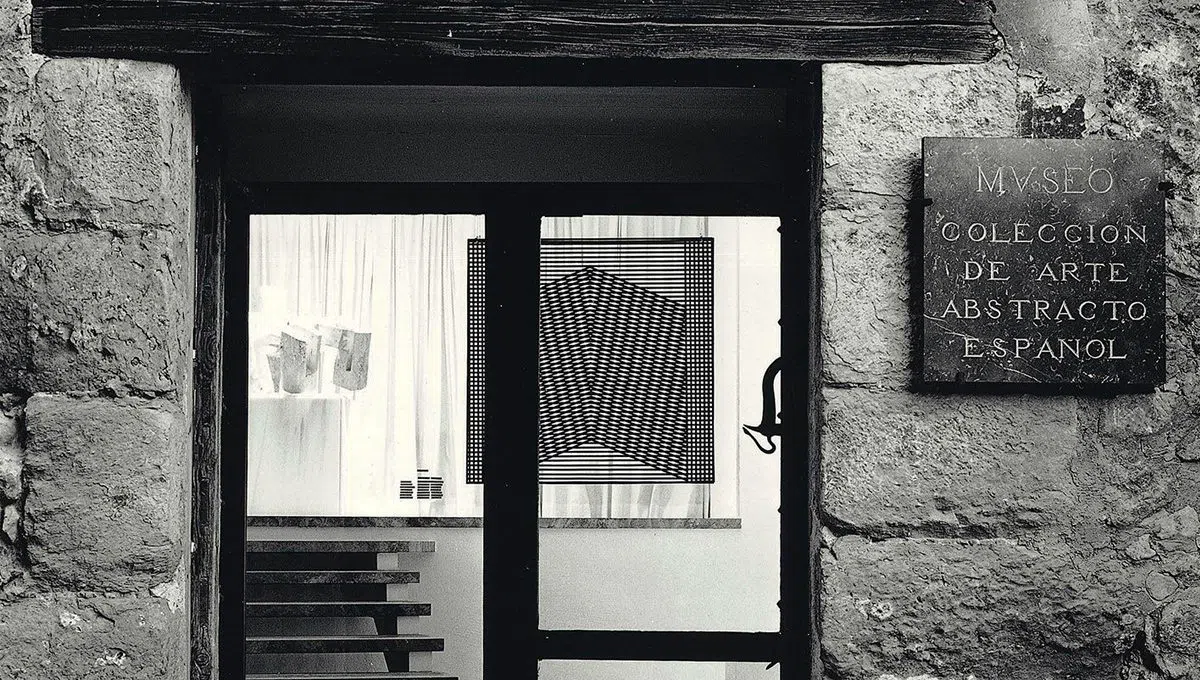
Cuenca (Castilla-La Mancha, under an hour by high-speed train, €30 to €45 return) is a cliff-top old town where the Casas Colgadas hang over the Huécar gorge on wooden balconies. Inside them, the Fundación Juan March's Museo de Arte Abstracto Español has just completed a major expansion and restoration for its fiftieth anniversary, reopening rooms with historic remains exposed and proper climate control; entry is modest. The rooms are small by nature, so book ahead and split a larger party rather than moving through as one block.
Salamanca (Castilla y León, 1h30 to 1h45 each way from Chamartín, €20 to €35 return) is a committed day rather than a casual one. Go on the first train, get off at Salamanca-La Alamedilla, which is much closer to the old town than the main station, and prioritise the Plaza Mayor, the two joined cathedrals and the university facade. It is a tourism-hardened university city and takes groups without difficulty; both the cathedral and the university accept group bookings.
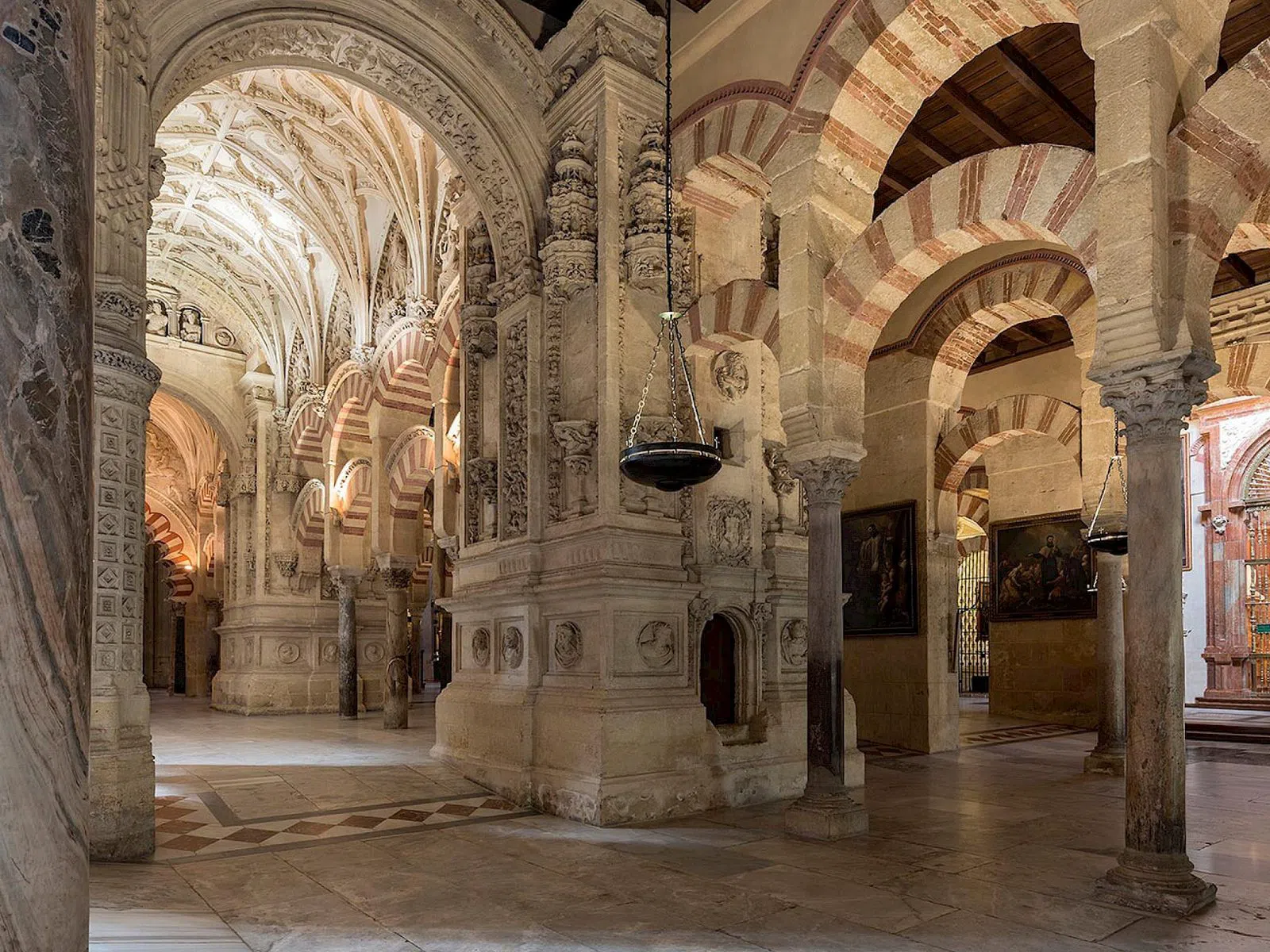
Mezquita-Catedral de Córdoba (Andalusia, AVE €60 to €90 return) is the most ambitious trip here and only works on the first fast train out. General entry is €15 from 1 April 2026, €13 before that date, €8 for ages 10 to 14 and free for under-10s. It handles very large numbers daily and has structured group entry, but midday is crushed. The calm slot is the free access to the grounds, 08:30 to 18:00 in winter and to 19:00 in summer, before the ticketed opening. Go once, go early, and accept that the rest of the city will have to wait for another trip.
When the group won't all queue for a cathedral
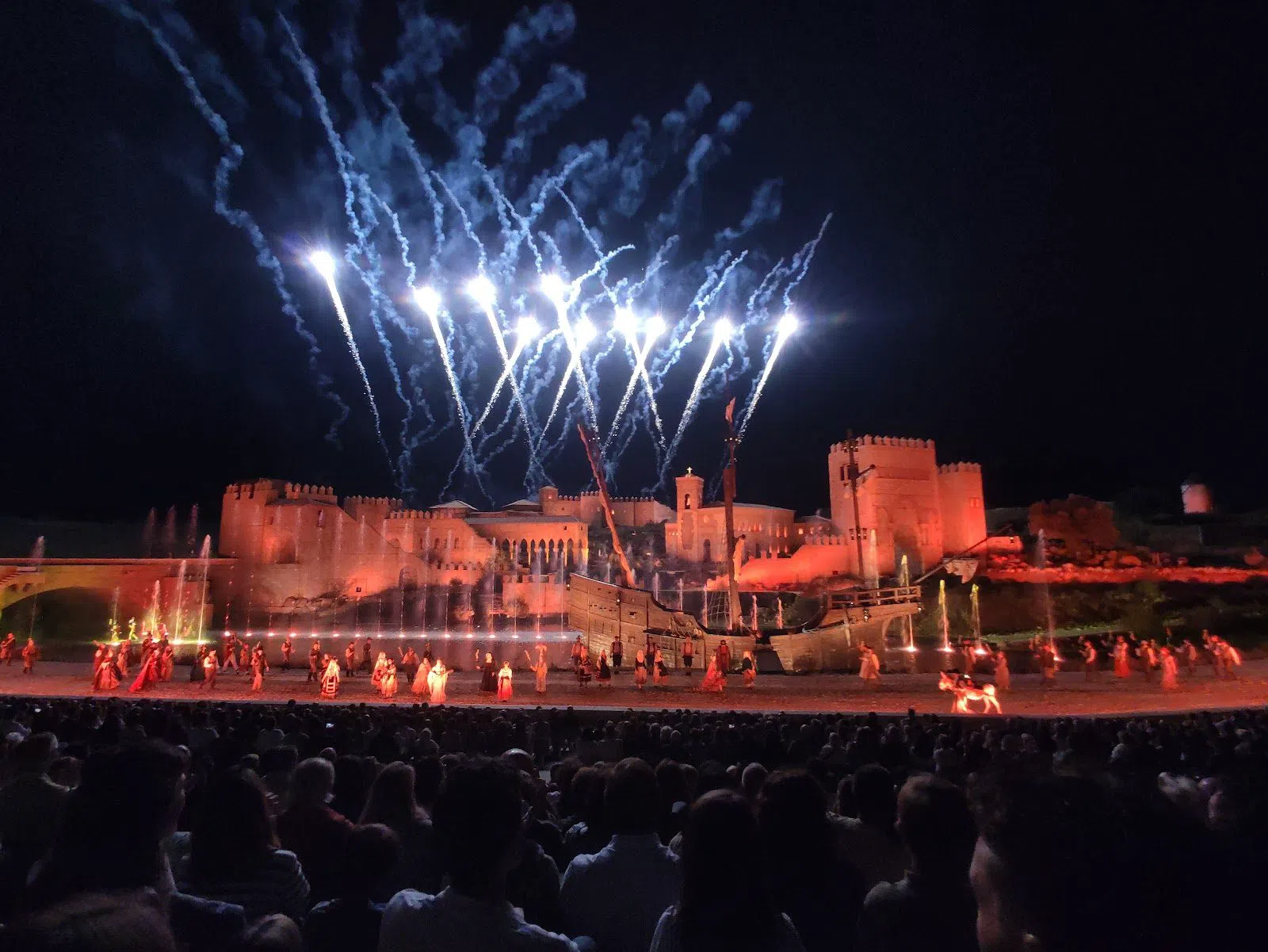
Puy du Fou España (just outside Toledo) is a historical show park rather than a monument, and it earns its place on a mixed-age itinerary. El Sueño de Toledo starts at €31, a park-plus-night-show combination from €53, and premium seating adds €12. It is explicitly set up for groups, with discounts for groups, large families and visitors with reduced mobility arranged by advance phone booking on 92 563 01 35. It is seasonal: the daytime park runs 7 March to 1 November 2026, the night show from 19 March to 1 November.
Practical notes before you book
Check which station your train leaves from. Atocha serves Toledo, Aranjuez and Cuenca; Chamartín serves Segovia, Ávila, Salamanca and Sigüenza. They sit on opposite sides of the city and the transfer is not quick. Avant and AVE fares rise as departure approaches, so buy a few weeks out; Cercanías tickets do not, and can be bought on the day. Buses leave from Plaza de Castilla for the sierra and from Pavones, in place of Conde de Casal, for Chinchón.
Cards work almost everywhere, but carry €30 to €40 in cash for village restaurants, bus fares and box-office-only tickets like the castle at Manzanares el Real. Mondays close El Escorial and that castle, so plan a town rather than a monument for a Monday. Spanish lunch runs roughly 14:00 to 16:00 and dinner rarely starts before 21:00, which is why an early train and a late return works so well.
As a budget guide: a Cercanías day with entries comes in around €25 to €35 a head, an Avant town with a cathedral or an Alcázar around €45 to €65, and Córdoba closer to €90 to €120 once the fast train and entry are counted. Two or three trips across a week is a comfortable rhythm; four starts to eat the city itself. Base yourself within reach of both main stations and the whole plateau is in range. Start with a Madrid hotel search before you fix the trips.
Before you go
If I only have time for one day trip from Madrid, which should it be?
Toledo needs the least arranging: 33 minutes on the Avant from Atocha, €13.90 to €18 return, and no booking needed for the town itself. In 2026 the Catedral Primada is also running Primada, its VIII Centenario exhibition for the 800 years since construction began. Aranjuez is the flat, green alternative, under €10 return on the Cercanías C-3, and its gardens are free.
Can I combine two day trips in a single day?
Some pair naturally, most don't. La Granja de San Ildefonso sits 11 km from Segovia and works as an afternoon after a Segovia morning, and Puy du Fou España is just outside Toledo. Trips in opposite directions from Madrid mean a return to the city between them, which costs two or three hours, so keep those on separate days.
Do I need to book train tickets in advance?
For Avant and AVE services (Toledo, Segovia, Ávila, Cuenca, Salamanca, Córdoba), yes: fares climb as departure nears and popular morning trains sell out. Cercanías routes to Alcalá de Henares, Aranjuez and El Escorial are cheap commuter services with no advance booking needed; buy on the day at the station.
Which trips work for a group of six or more?
Segovia (roast-pig mesones with long tables, and group rates through entradas.alcazardesegovia.com), Ávila (four separate wall access points, so you can split a party), Chinchón (mesones built for big tables, book ahead at weekends) and Puy du Fou España (group discounts by phone on 92 563 01 35). Book cathedral slots ahead in Toledo, and split large parties at Cuenca, where the museum rooms inside the hanging houses are small.
What's closed on Mondays?
El Escorial and the Castillo de Manzanares el Real both close on Mondays. Use a Monday for a town rather than a single monument (Toledo, Segovia, Ávila or Chinchón) and keep the palaces for the rest of the week. Free-visit tickets at Manzanares are sold at the box office only, never online.